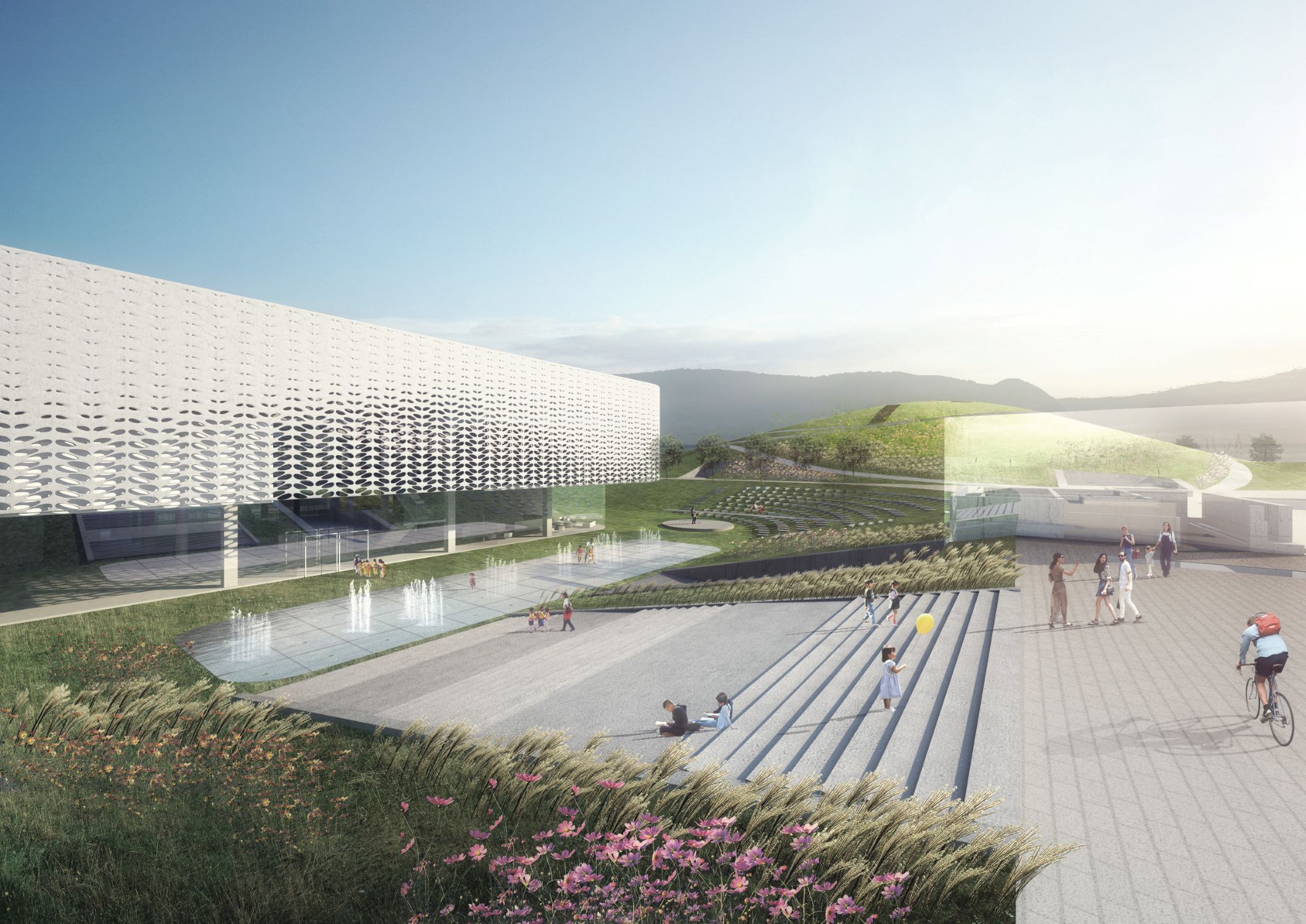
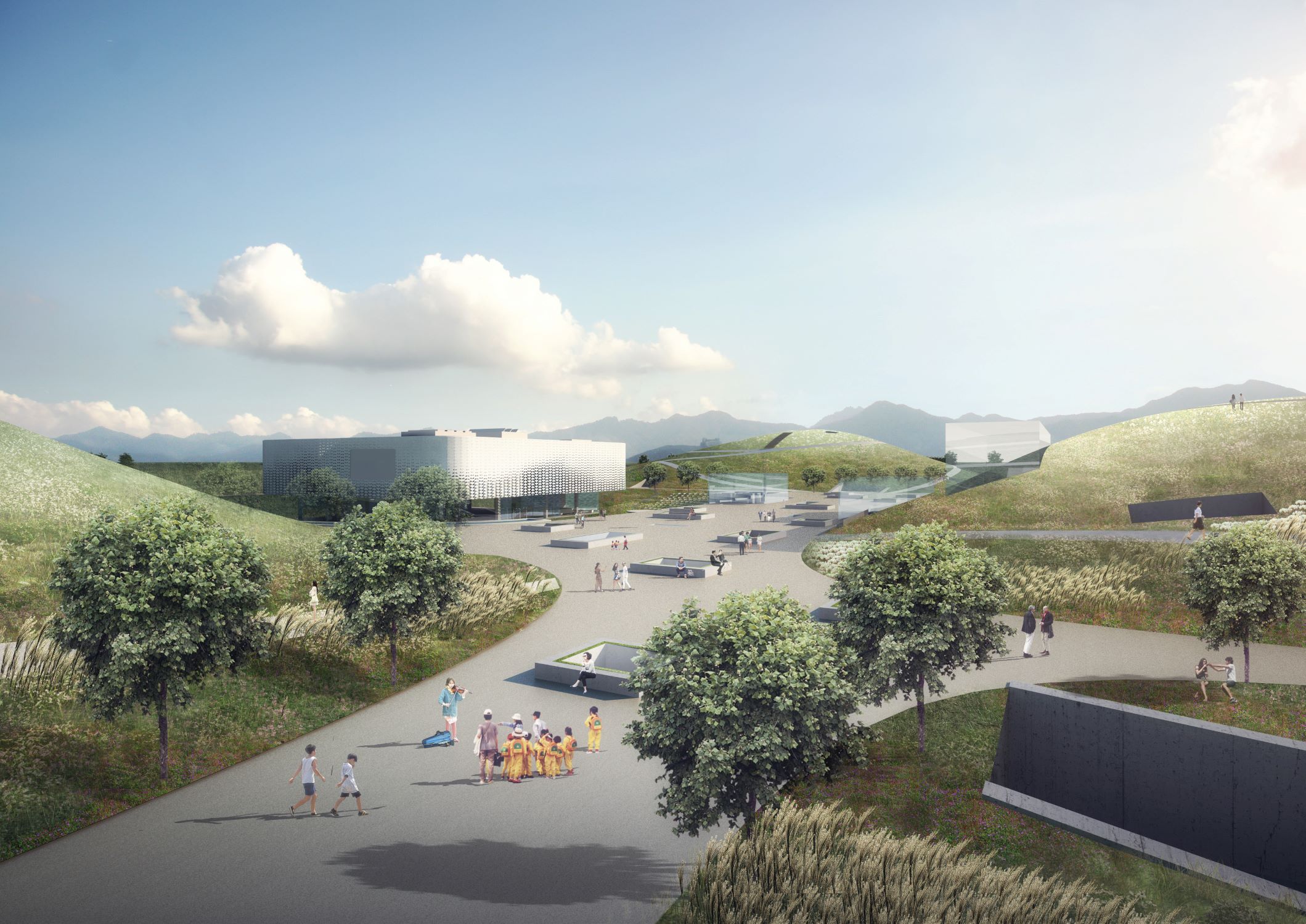
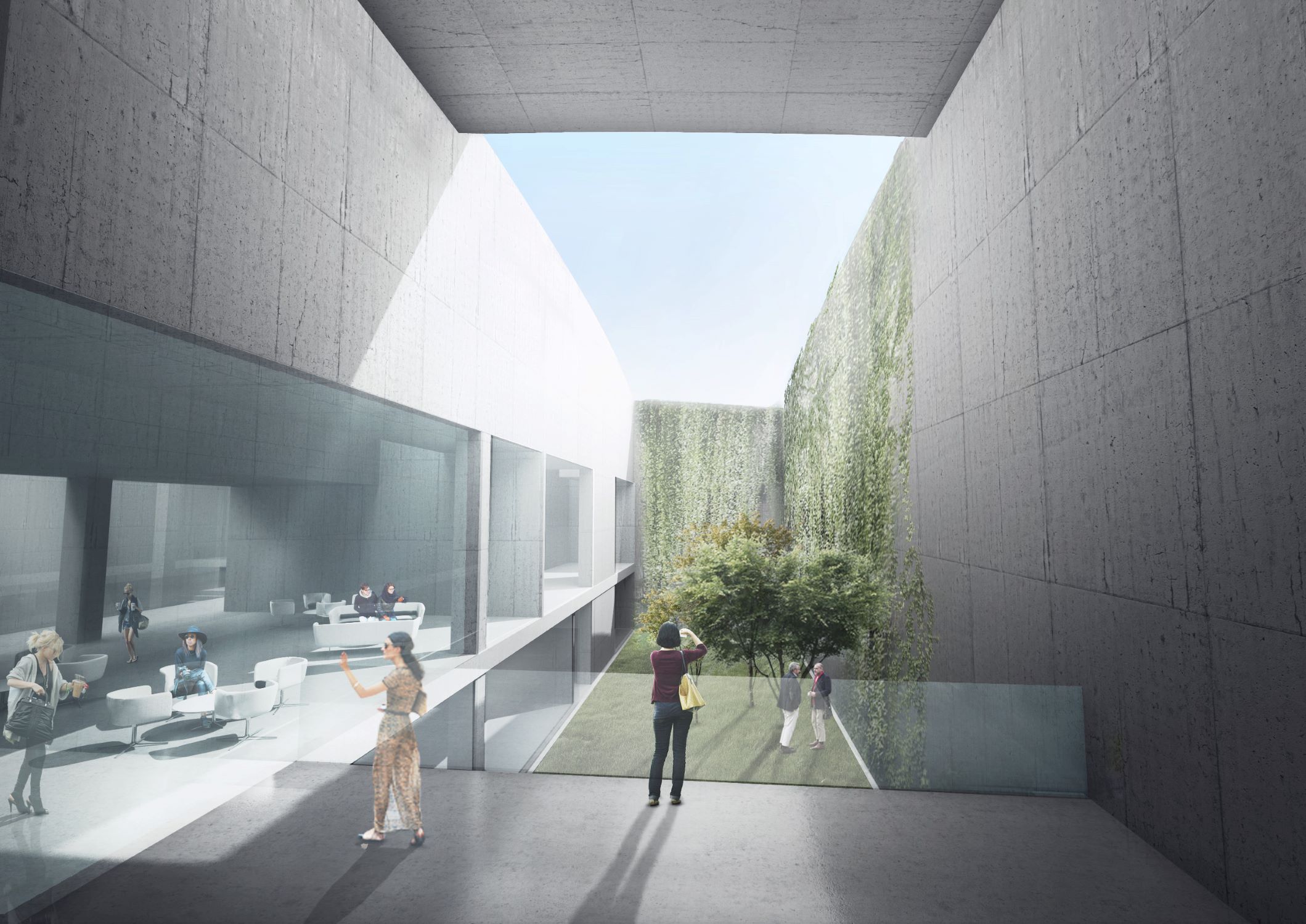
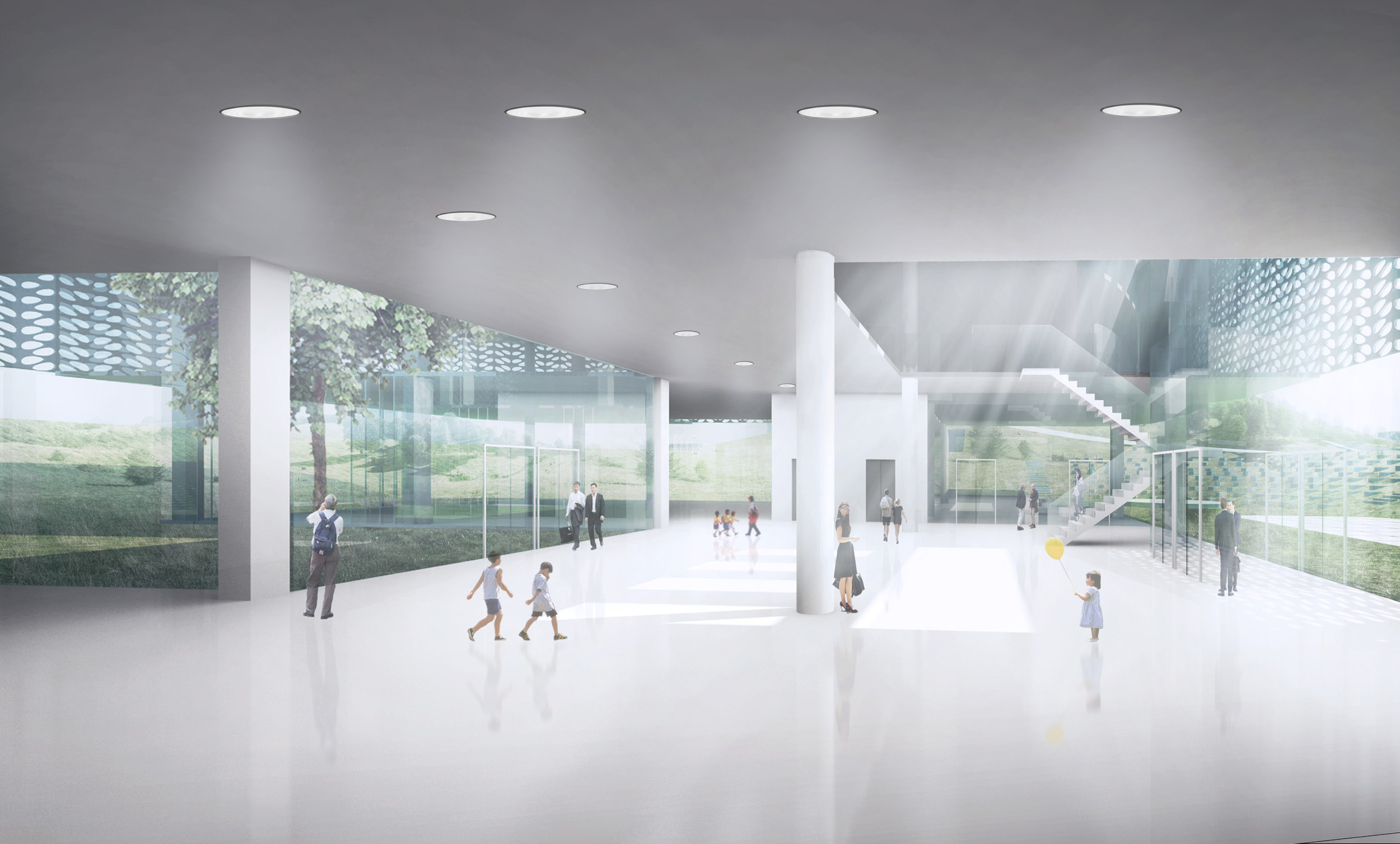
The traditional Korean space is characterized for restructuring the nature within the given specific land using at the most the given and nearby natural conditions. The natural condition of Korea where most of the lands are surrounded by mountains is in line with the question of how to interpret the given land within nature and how to make a new space in the most harmonious manner. For example, in the case of the Anapji Pond of Gyeongju, there was created a curve in the pond to expand the space in the perspective plan during the construction of the artificial pond. Similar to this, the royal tombs of the Shilla and Backje dynasties showed a new morphological identity as a group within the topographic condition of the surrounding mountains. Based on this interpretation of nature and land, the act of establishing a new significance on a topography surrounded by mountains has a similar meaning with the context of interpreting nature in the traditional Korean space. This project is performed in a flat cast-in topography and it is formed in the point where the context of a distant view of nearby mountains and the borrowed scenery of newly created mounds encounter.