Herma Parking Building

Information

  • Location: Yongin-si, Gyeonggi-do, South Korea
  • Year: 2010
  • Type: Commercial, Parking building
  • Site Area: 853.7 sqm
  • Building Area: 639.4 sqm
  • Gross Floor Area: 2,554.29 sqm
  • Materials: Reinforced Concrete, Steel Stairs, Polycarbonate, Polished Stainless Panel
  • Building Scope: B1F - 4F

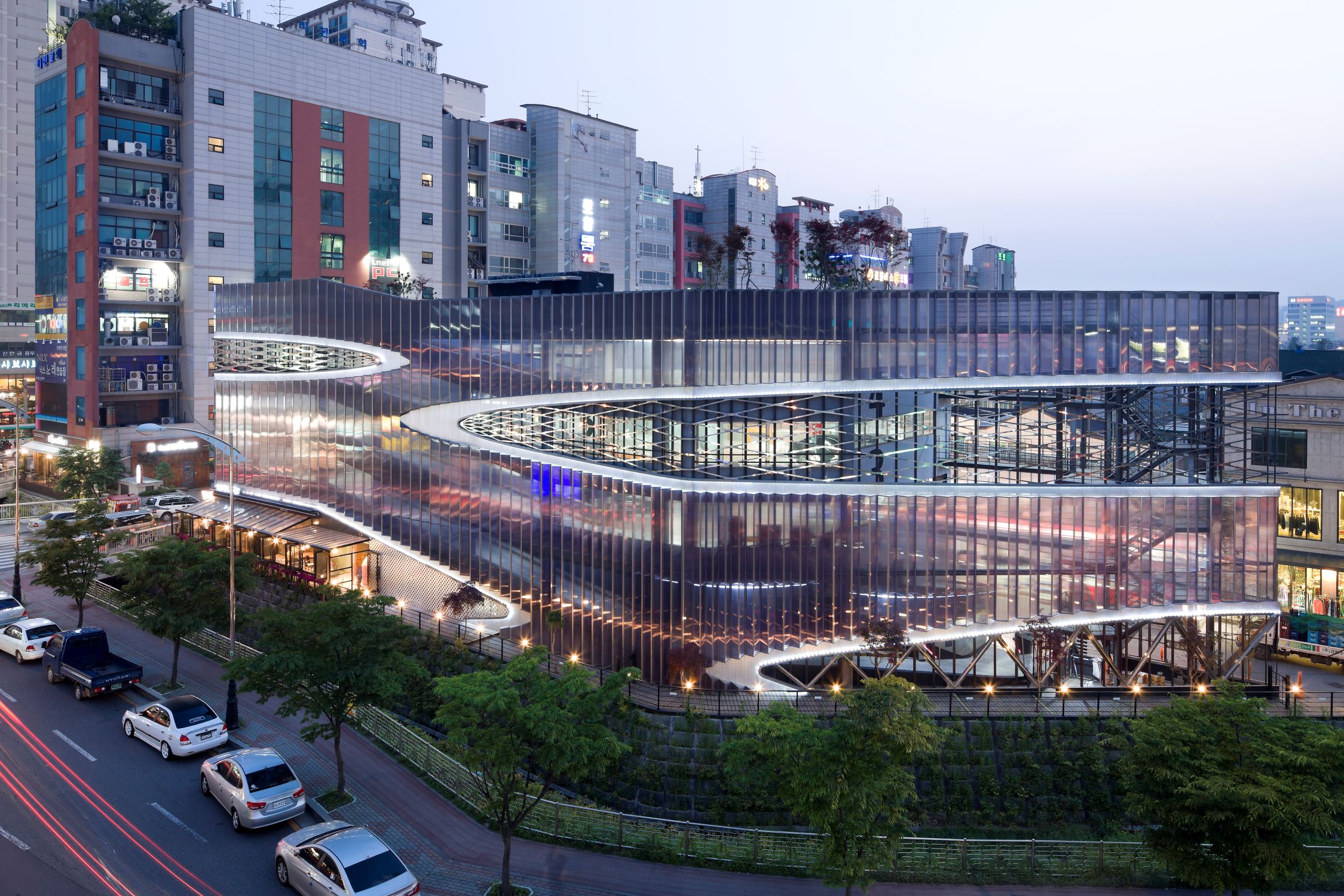
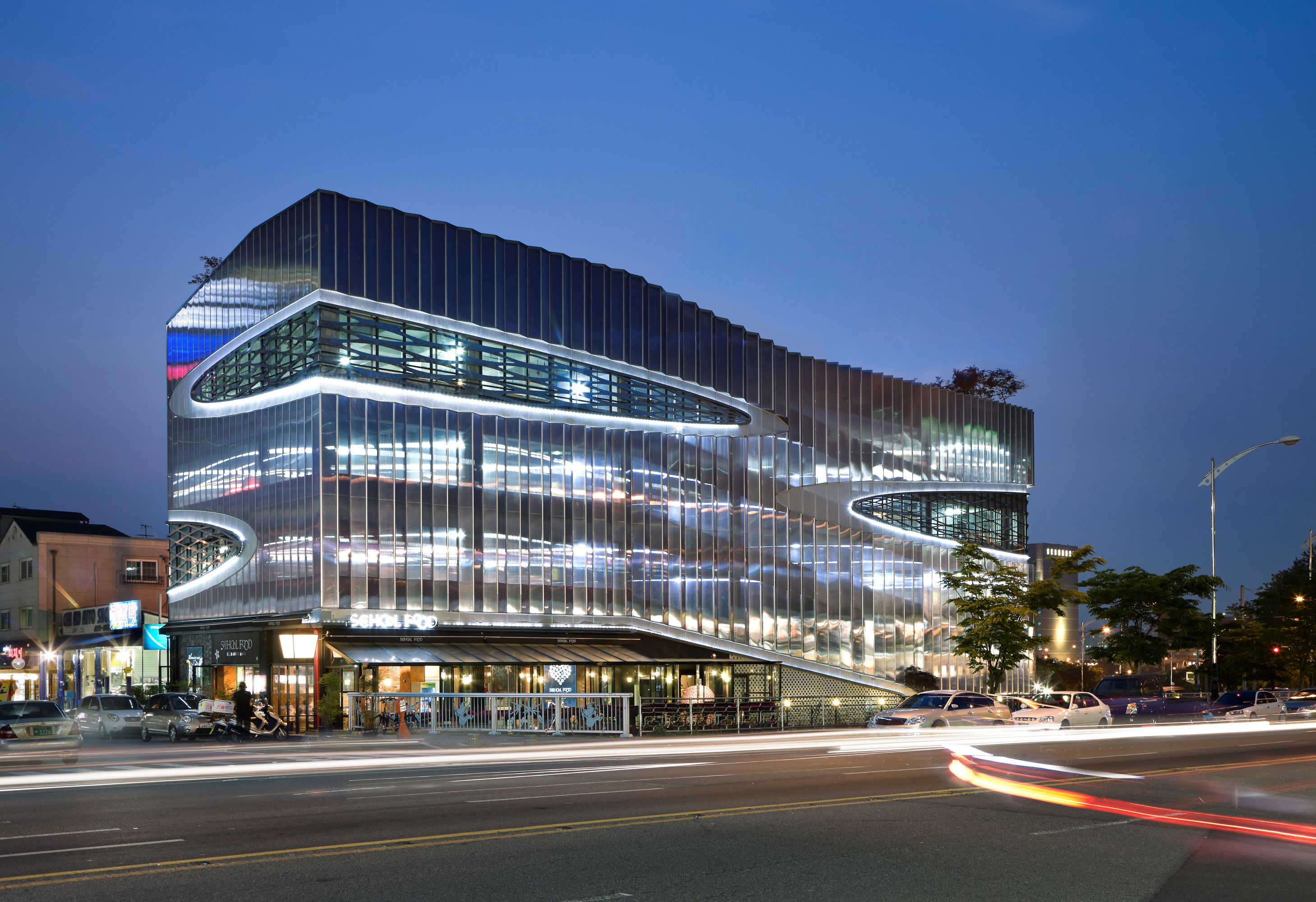
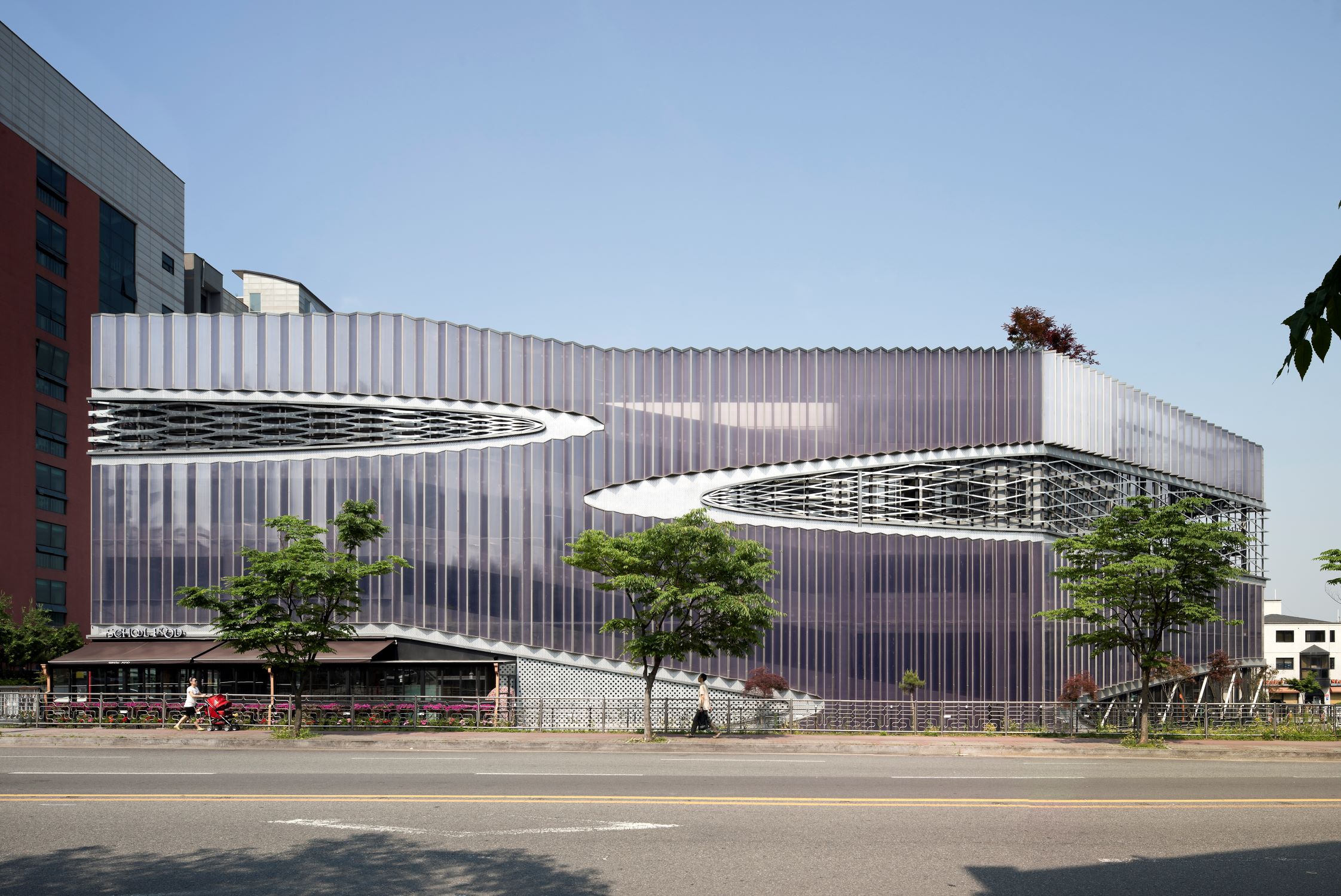
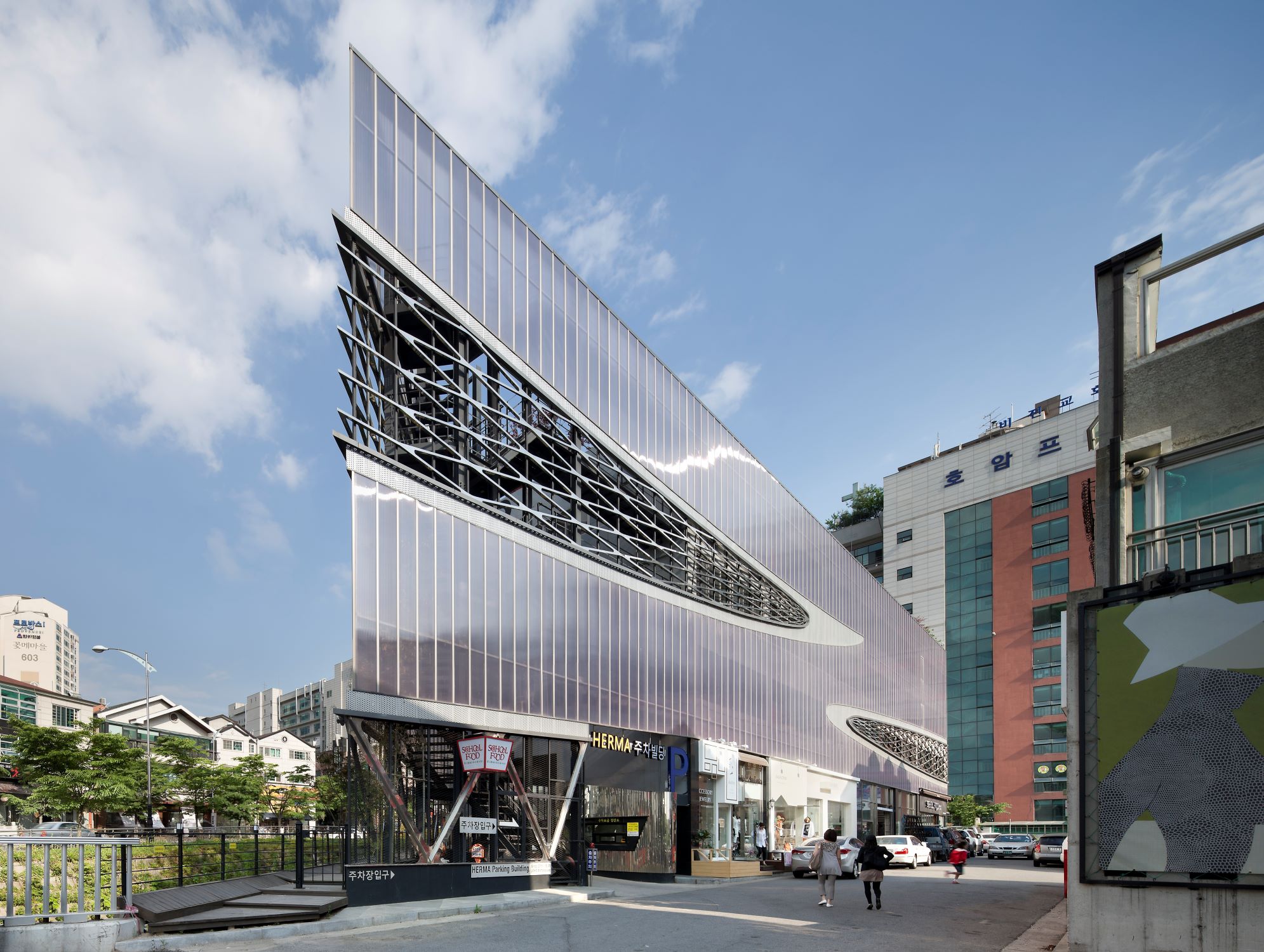
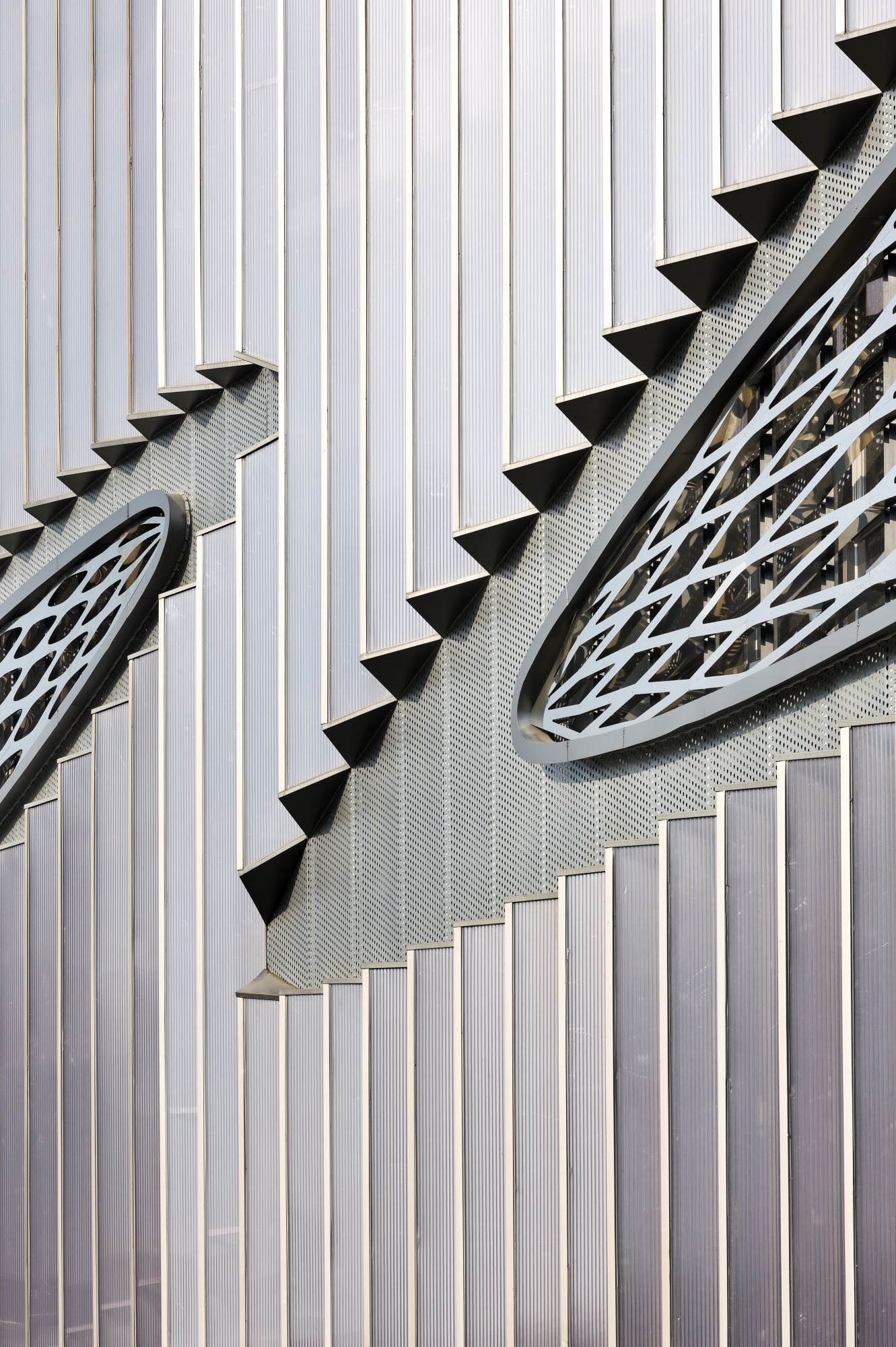
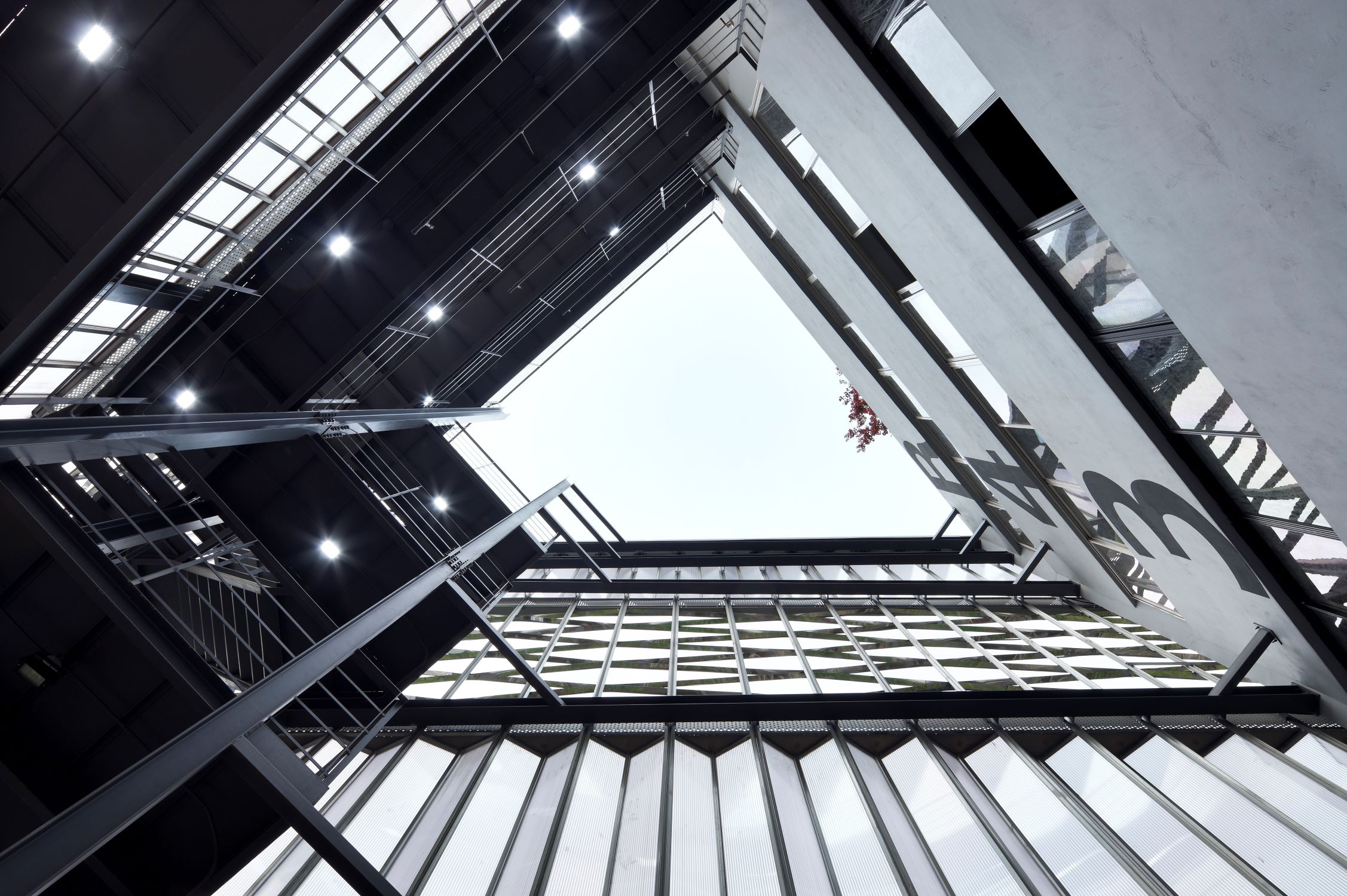
신도시의 지구단위계획으로 지정된 주차장 부지는 도심의 중심부에 위치한다. 그러나 이러한 입지적 잠재력에도 불구하고, 주차장은 여전히 도시 경관을 저해하는 시설로 건설되기 일쑤다. 본 프로젝트는 한국 신도시의 이러한 현실을 배경으로, '주차장 같지 않은 주차장’을 제안함으로써 도시 경관과 주차장의 가치를 동시에 상승시키고자 한 시도이다. 법규상 주차장과 상가의 비율이 8:2로 규정된 조건 속에서, 본 계획은 주차장의 외관을 하나의 통합된 디자인 대상으로 설정하였다. 이를 통해 ‘주차장에 딸린 상가’가 아니라, '상가에 포함된 주차장’이라는 인식을 구축하고자 하였다. 상업성을 확보하기 위해 주차 폭을 3.5m로 계획하여 상가 면적을 극대화하였으며, 외피는 경제적으로 구축 가능한 재료를 중심으로 구성하였다. 외피에는 5겹으로 적층된 폴리카보네이트의 굴절성을 활용하여, 빛의 각도에 따라 서로 다른 표정으로 인식되도록 의도하였다. 여기에 약 900여 개의 서로 다른 스테인리스 패턴을 용접 시공하여 외관에 상징성과 깊이를 부여하였다. 전면 입면은 삼각형 유닛으로 구성되며, 각 유닛은 60도에서 140도까지 서로 다른 각도로 배치된다. 이러한 입면 구성은 외부 광원의 변화에 따라 중성적이면서도 유동적인 이미지를 발산하며, 기능 중심 시설인 주차장을 도시적 오브제로 전환한다.

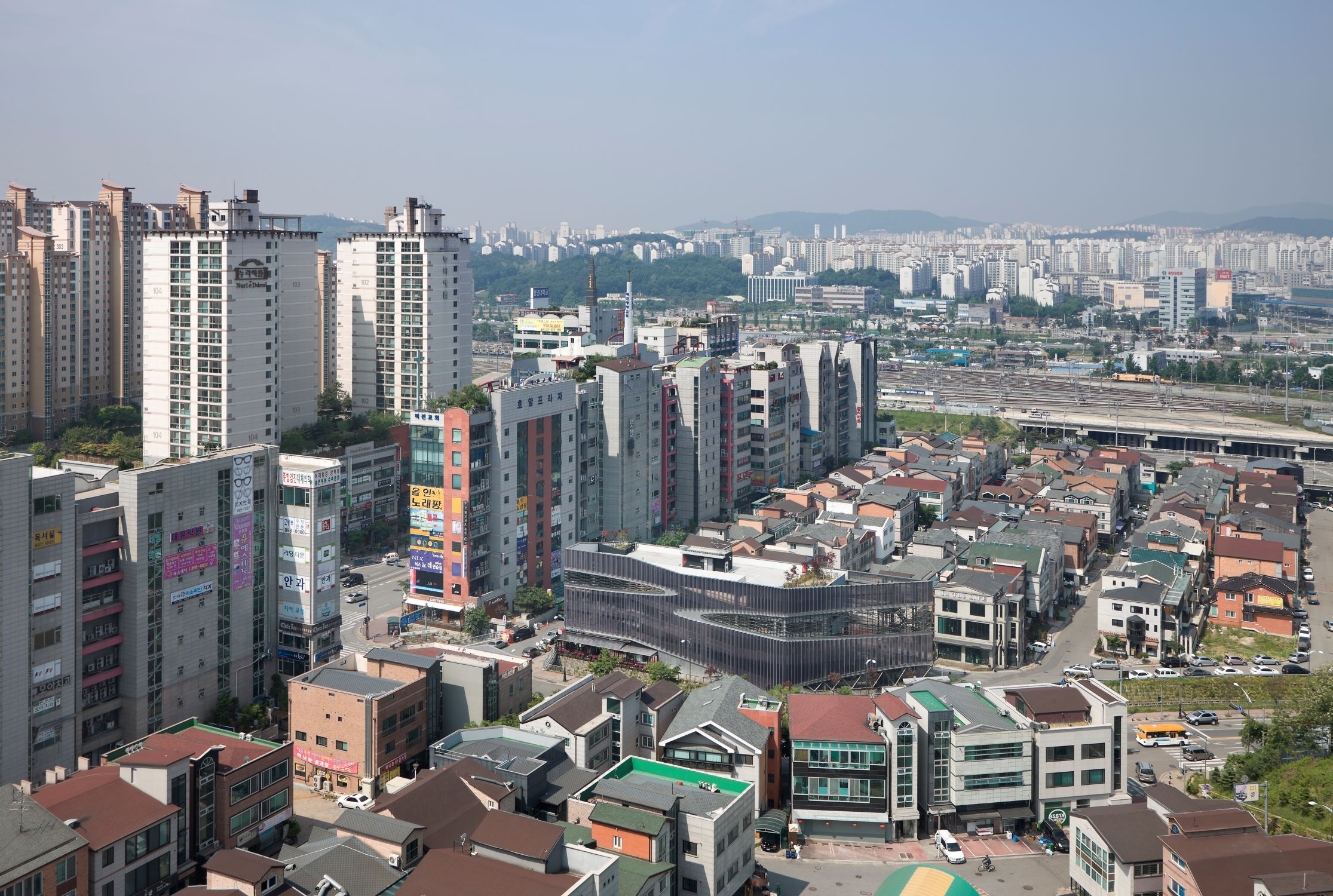
Parking sites designated through district unit planning in new towns are often located at the very center of the urban fabric. Despite this locational potential, parking structures are frequently realized as facilities that degrade the urban landscape. Against this backdrop, the project proposes a “parking structure that does not look like a parking structure,” aiming to simultaneously elevate the value of both the cityscape and the parking facility itself.
Within regulatory constraints that require an 8:2 ratio between parking and commercial use, the project treats the parking structure’s exterior as a single, unified design object. Through this approach, it seeks to reverse the conventional perception-shifting from a “commercial facility attached to a parking structure” to a “parking structure embedded within a commercial facility.” To secure commercial viability, the parking bay width was set at 3.5 meters, maximizing leasable retail area, while the envelope was composed using economically efficient materials.
The façade employs the refractive properties of a five-layer polycarbonate system, allowing its appearance to change according to the angle of light. In addition, approximately 900 unique stainless-steel patterns were welded onto the surface to introduce symbolic depth and visual complexity. The primary elevation is composed of triangular units arranged at varying angles ranging from 60 to 140 degrees. Through this configuration, the façade emits a neutral yet fluid image that shifts with changing light conditions, transforming a purely functional parking facility into an urban object with architectural presence.

Go to list