



Namhae Cheo-ma House



Information
- Location: Namhae-gun, Gyeongsangnam-do, South Korea
- Year: 2011
- Type: Residential
- Site Area: 576.00 sqm
- Building Area: 105.12 sqm
- Gross Floor Area: 76.61 sqm
- Materials: Steel Frame, Aluminum Bar
- Building Scope: 1F
어설프게 수입된 서구식 목조 주택과 붉은 벽돌집에 대한 환상은 한국 농촌 공동체의 전형적인 풍경을 형성했다. 경관이나 대나무 숲의 정신에 대한 고민 없이, 붉은 벽돌집은 농민들에게는 로망이 되었고 건축가들에게는 궁극적인 건축적 목표가 되었다.
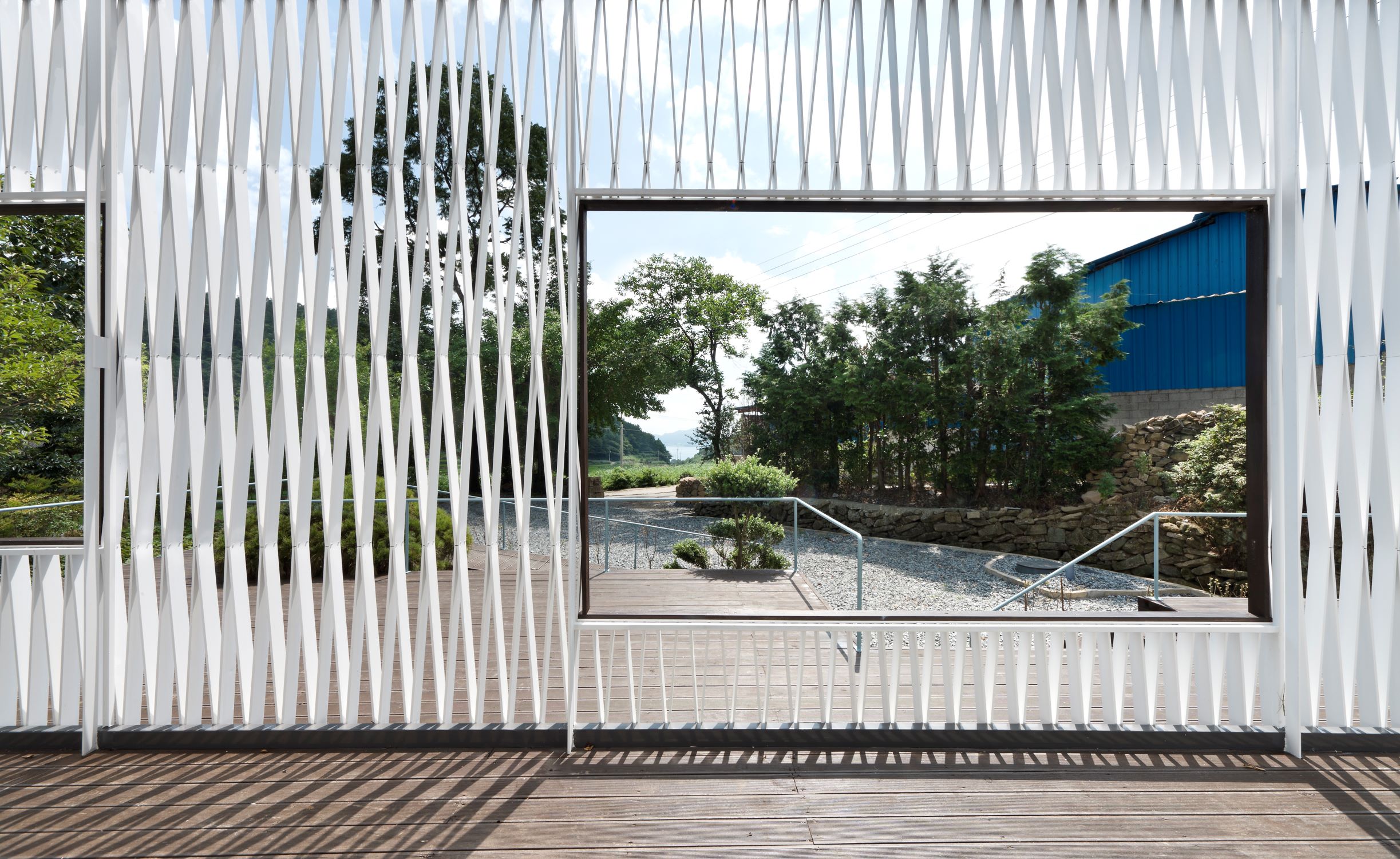
하나의 선은 또 다른 선을 만든다. 스카이라인, 산의 선, 그리고 땅의 선은 모두 절대자의 선이다. 새로 그려진 선은 땅을 포착하는 것, 그리고 하늘과 땅이 합쳐지는 지점을 의미한다. 결국 처마는 인간과 그 위의 존재가 만나는 선을 설정하는 것을 의미할지 모른다. 처마는 자신만의 선으로 땅을 포용하는 동시에 자연의 능선으로 스스로를 위장한다.
이러한 처마의 역설적인 이중성은 조화롭지만 같지 않고, 비슷하지만 다르다는 한국의 철학과 맞닿아 있다. 그것이 우리의 삶이며 그 선이 지닌 덕목이다.
The fantasy of awkwardly-imported western wooden houses and red brick houses formed a typical picture of Korean rural communities. Without any concern about a landscape or a spirit of bamboo forest, red-brick houses have become a romance for farmers and an ultimate architectural goal for architects. A line produces another line. Sky-line, mountain-line, and land-line are all the ab- solute's line. A newly drawn line means capturing the earth and the point where the sky and the land merge.
After all, CheoMa possibly means setting a line where mankind and above meet. It embraces the land in its own line and disguises itself in nature's ridge at the same time. This paradoxical duplicity of CheoMa meets the Korean philosophy of being harmonious but not the same and being similar but different. It is our lives and the virtue that the line has.