



Time Stacking House



Information
- Location: Seoul, South Korea
- Year: 2013
- Type: Residential
- Site Area: 327.22 sqm
- Building Area: 98.15 sqm
- Gross Floor Area: 255.44 sqm
- Materials: Existing Red Brick, Extension Bright Red Brick
- Building Scope: B1F-2F
역설적으로 회상이란 축적된 현존이 ‘존재’하는 상태다. 시간은 공간에 흔적을 남기지만, 실질적으로 공간은 시간을 거치며 변한다. 만약 시간이 우리의 의식 속에만 존재하는 것이라면, 우리가 그것을 실체적인 형상으로 재현할 수 있다고 어떻게 확신할 수 있을까? 건축은 우리가 불확실한 존재로 감각하는 시간을 시각화한 결과물이다. 따라서 건축은 존재의 통시적, 공시적 가치를 드러내는 필수적인 과정으로서 역사성을 지닌다.
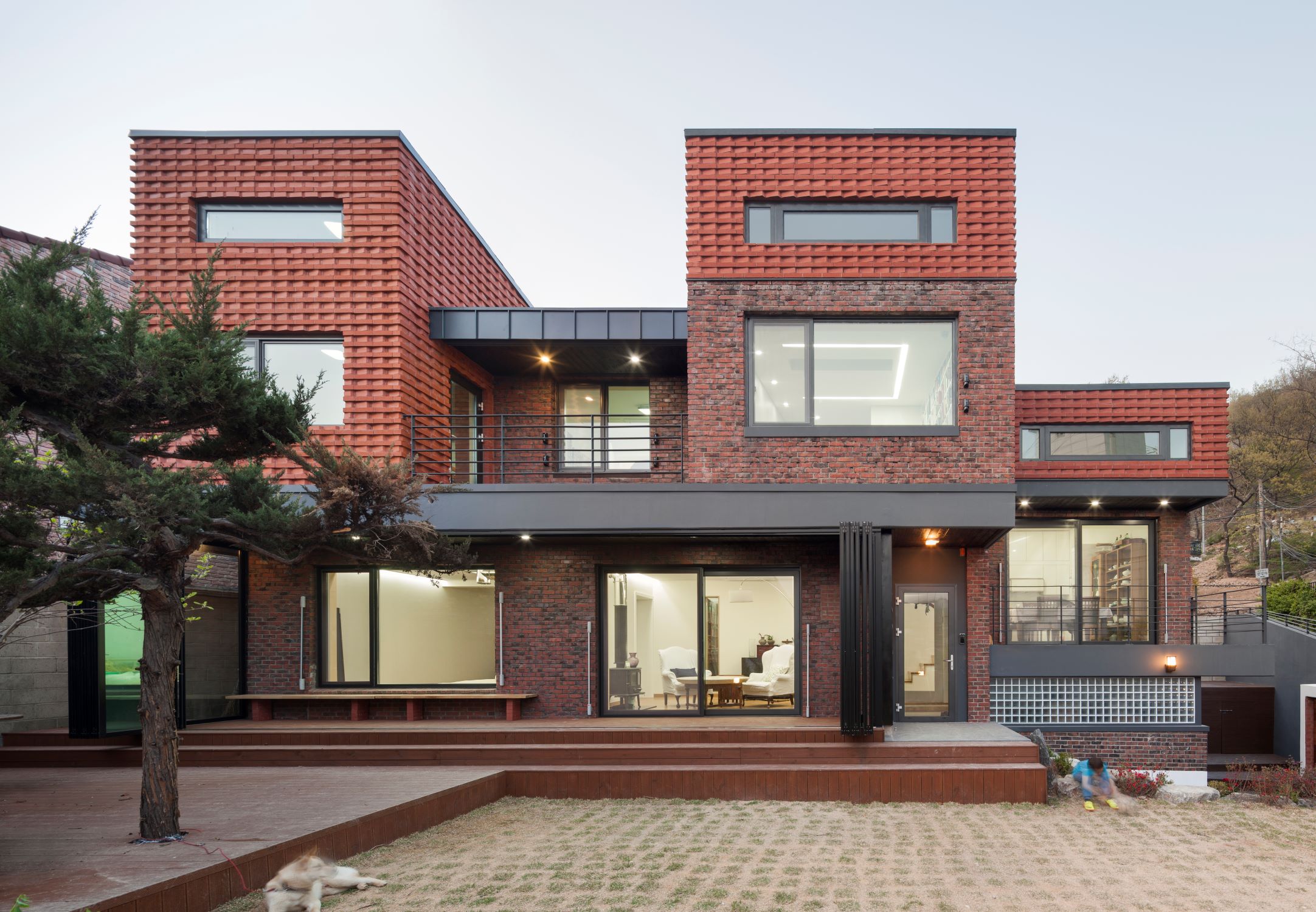
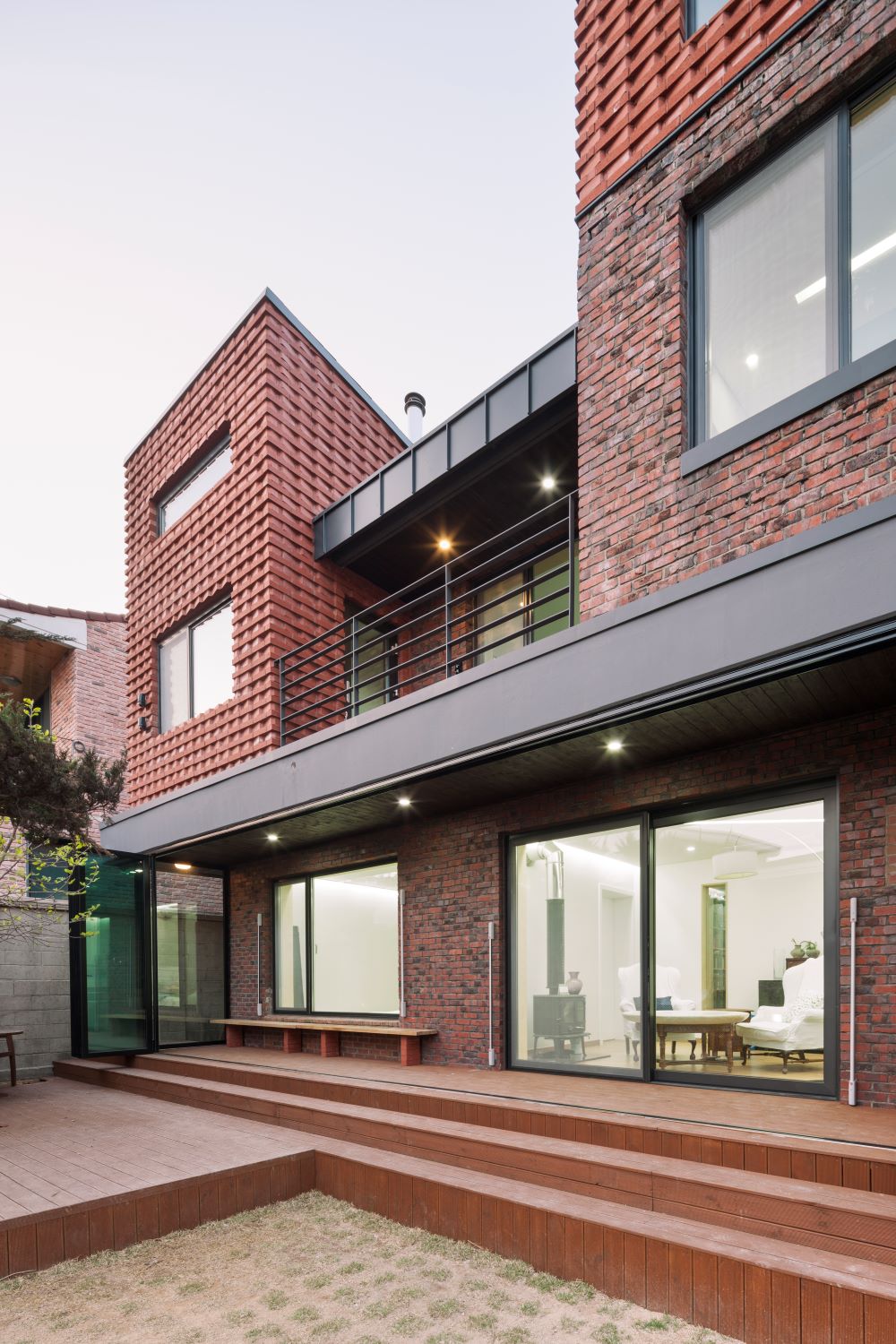
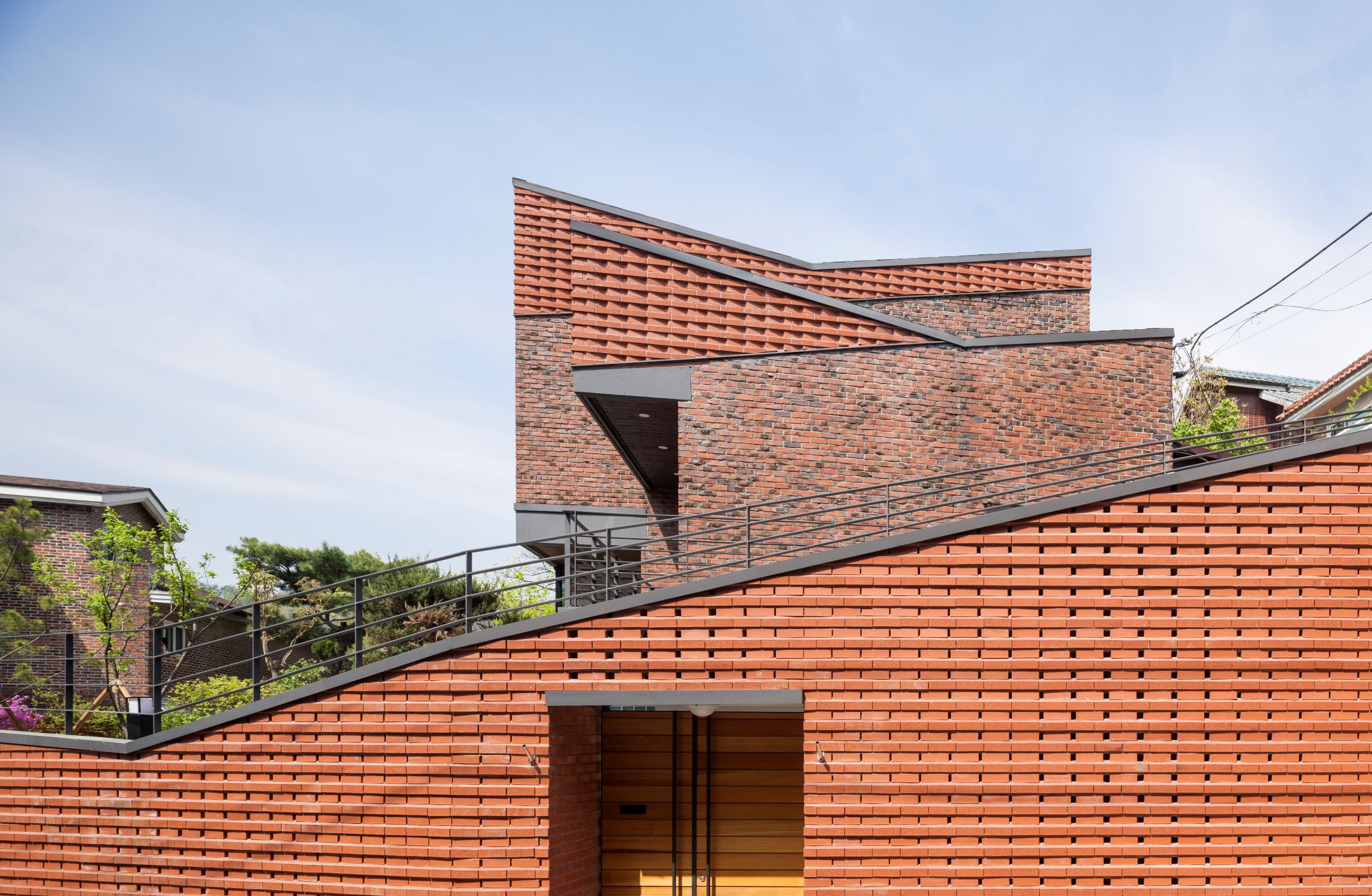
‘Time stacking house’는 30년 된 조적 벽체 위에 새로운 조적을 덧입힌 리모델링 프로젝트다. 이 프로젝트는 보존된 기존 벽체 위에 작업을 이어감으로써 그 유산을 존중한다. 기존 주택에 쓰인 벽돌들은 70~80년대에 유행했으나 지금은 더 이상 생산되지 않는 것들이다. 세월의 흔적은 벽돌의 패턴과 질감 위에 우아하게 남아 이 집의 역사를 나타낸다. 30년 전의 흔적 위로 증축된 부분에 새로 생산된 벽돌을 사용해, 과거와 현재의 동시적 현존을 병치하는 것이 이 프로젝트의 접근 방식이었다. 벽돌의 정교한 색상과 종류를 선택함으로써, 이 공간은 과거와 현재의 대화를 매개하는 견고한 시간 캡슐을 재현한다. 또한 이번 증축은 단순한 공간적, 양적 확장을 넘어 빛과 공기의 순환을 배열하는 전략으로서 증축을 바라보는 새로운 관점을 담고 있다.
Paradoxically, reminiscence is the state of 'being' of the accumulated presence. Time leaves traces through space, but in reality, space changes through time. If time only exists inside our consciousness, how are we certain that we can reproduce it as a substantial figure? Architecture is the result of illustrating time we sense as an uncertain being. Therefore, architecture is historical as an essential process to present the diachronic and synchronic value of being.
The 'Time Stacking House' is a renovation project where the 30-year-old masonry is layered with new masonry. The project respects the heritage by renovating on top of the preserved masonry. The bricks used in the existing house were those that were popular in the 70s and 80s but are no longer produced today. The trace of the age remains elegantly on the patterns and texture of the bricks, denoting the history of this house.
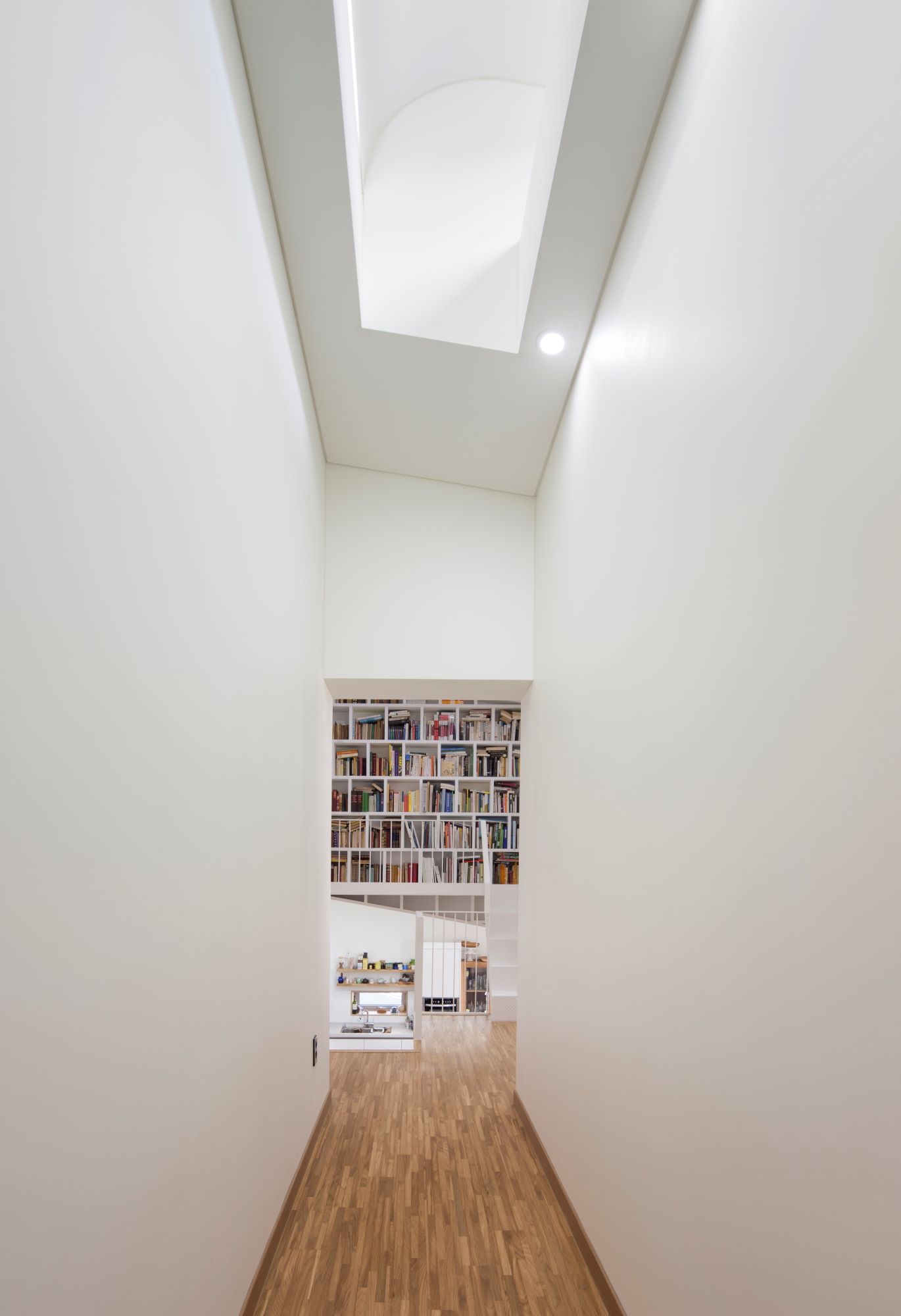
The project's approach was to utilize newly produced bricks on the extended parts over the 30-year-old traces, juxtaposing the simultaneous presence of past and present. By choosing the exact color and type of bricks, the space recreates a rigid temporal time capsule mediating a conversation between the past and present. Furthermore, the extension offers a new perspective, seeing the addition as a strategy for sequencing the circulation of light and air, rather than a simple spatial or quantitative expansion.