



Moebius House

Information
- Location: Gangneung-si, Gangwon-do, South Korea
- Year: 2015.05
- Type: Resiential
- Site Area: 787 sqm
- Building Area: 225.23 sqm
- Gross Floor Area: -
- Materials: Marble, Color Steel, Granite
- Building Scope: 3F
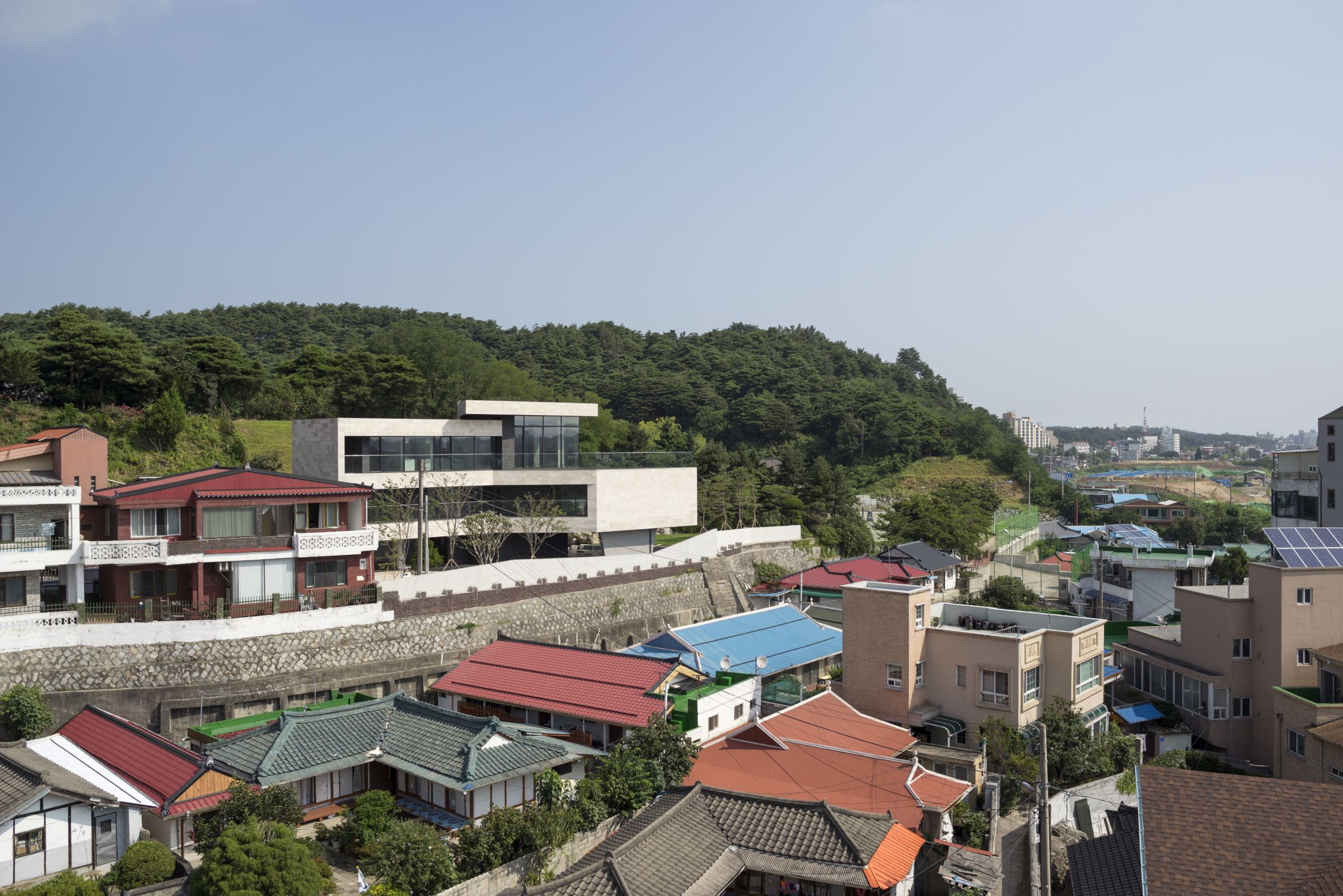
Moebius House는 강릉의 도시 경관을 적극적으로 수용하는 동시에, 한국형 패시브 하우스(Passive Housing)의 개념을 설계의 핵심으로 삼은 주택 프로젝트이다. 본 건축은 대지의 도시적 맥락에 대응하며, ‘뫼비우스의 띠’라는 공간적 개념을 통해 대지와 건축 사이의 밀접한 상관관계를 탐구한다.
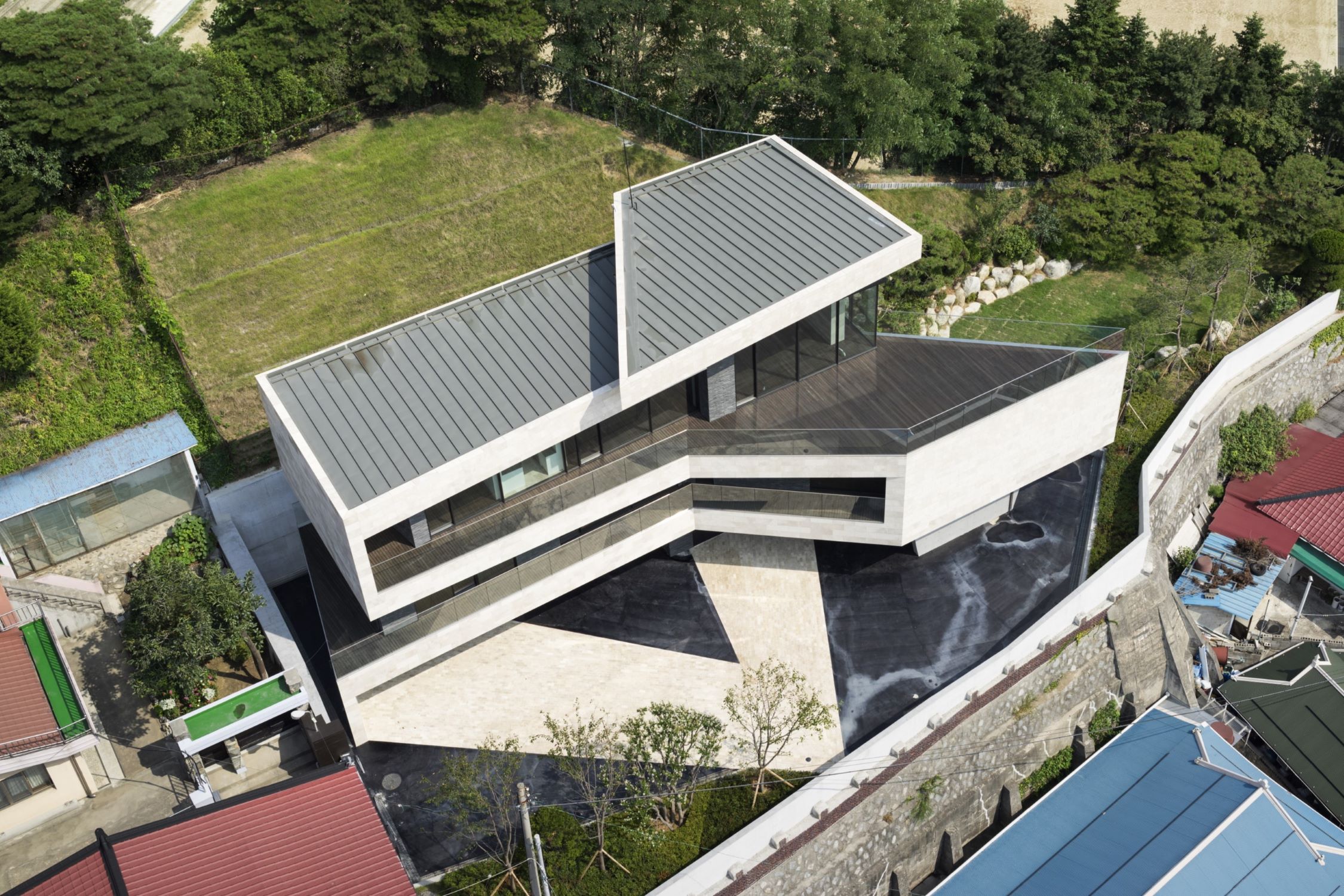
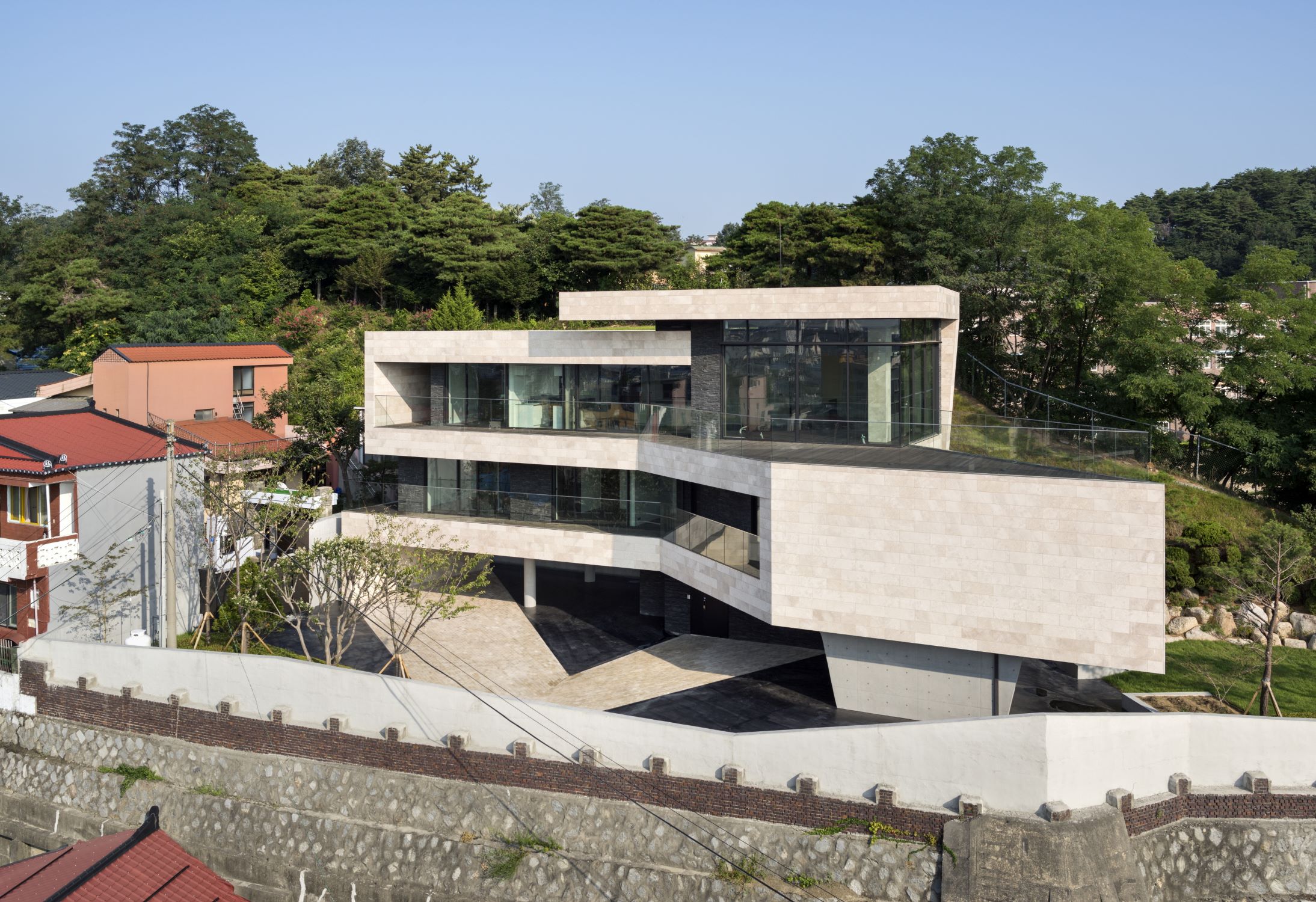
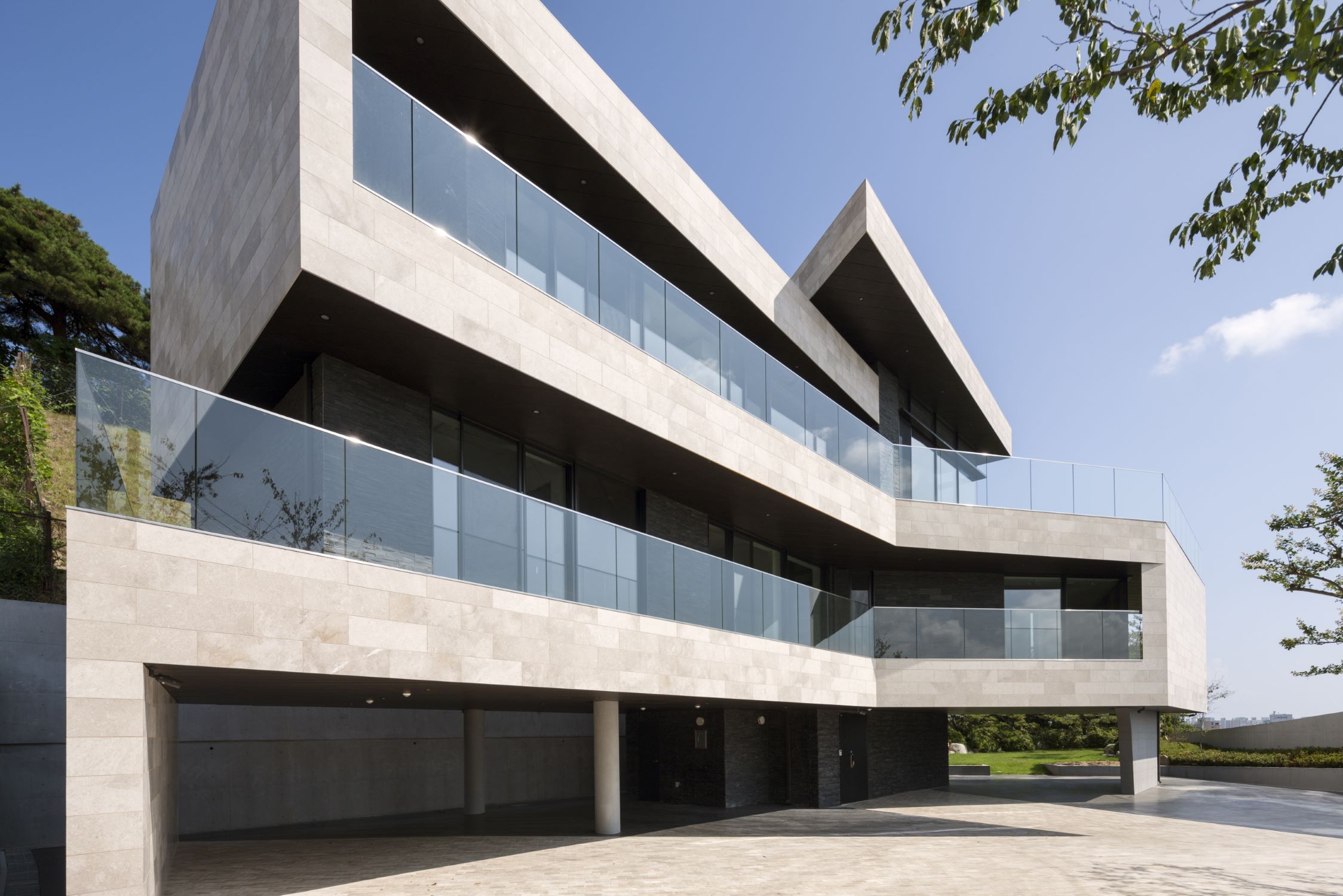
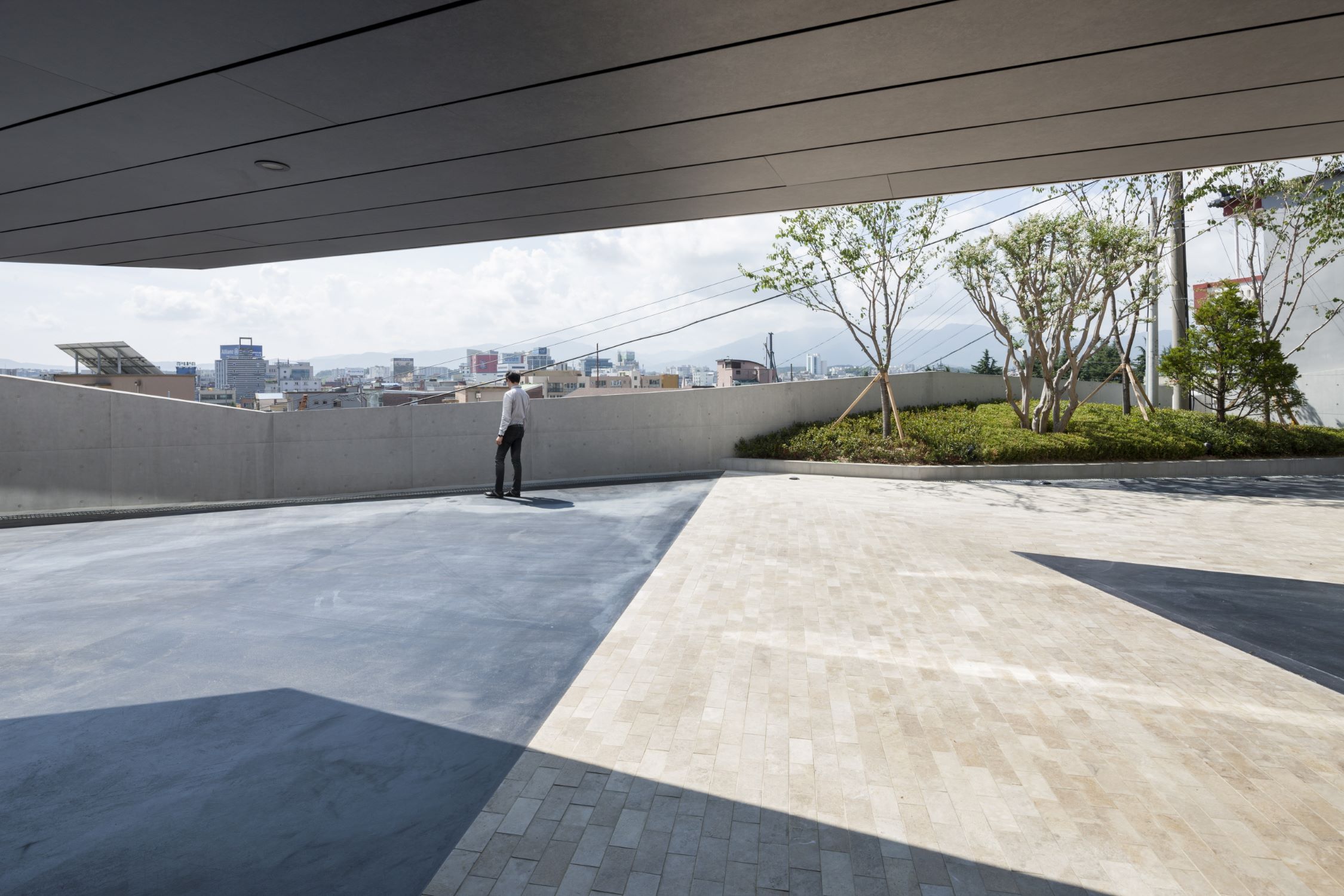
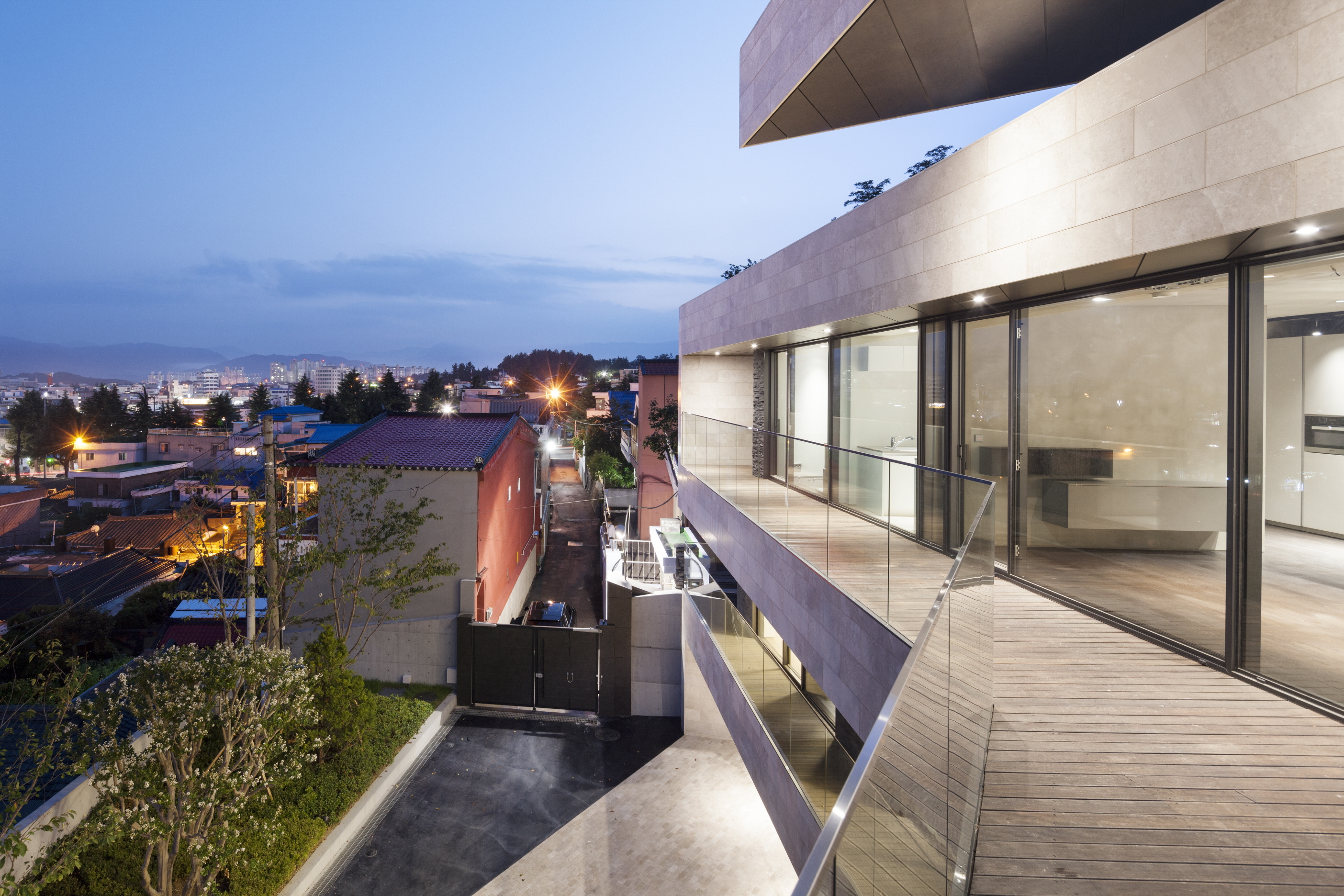
약 30미터에 이르는 골목길의 끝자락에 위치한 대지는 본 프로젝트의 주요 모티브로 작동한다. 골목길의 선형적 흐름은 뫼비우스 띠로 재해석되어 삼차원적으로 대지를 감싸며 하나의 연속된 매스를 형성한다. 이 띠는 매스와 일정한 간극을 유지하며 테라스를 만들어내고, 이는 다양한 각도의 입면을 구성함과 동시에 거주 공간에 충분한 프라이버시를 제공한다.
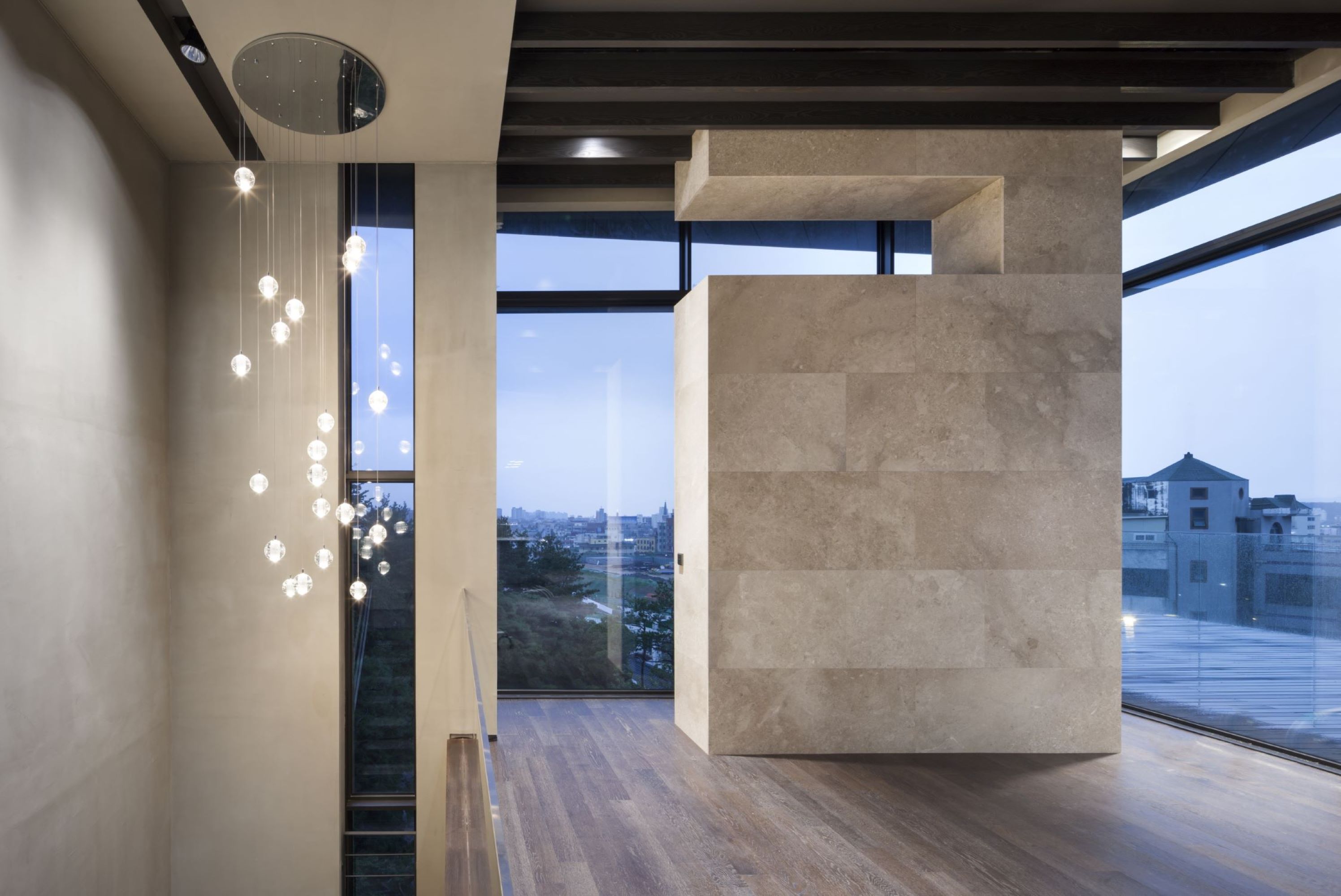
주요 생활 공간은 3층에 배치되어 도시 조망을 확보하고, 2층에는 침실을 두어 외부 환경으로부터 보다 사적인 영역을 형성한다. 고성능 단열재로 구성된 외피는 열 손실을 최소화하고 건물의 에너지 효율을 극대화하며, 패시브 하우스의 기본 조건을 충실히 구현한다.
이러한 패시브 설계는 스마트 빌딩 시스템을 통해 한층 강화된다. 난방, 환기, 차양, 조명 등 주요 환경 요소는 와이파이 기반의 통합 제어 시스템으로 관리되며, 온도·습도·공기질 센서를 통해 실내외 환경 변화에 따라 자동으로 조절된다. 이를 통해 최소한의 에너지로 쾌적한 실내 환경과 항상 정화된 공기의 순환이 유지된다.
Moebius House는 패시브 디자인과 지능형 제어 시스템을 결합함으로써, 공간의 연속성·거주자의 안락함·에너지 효율이 하나의 건축적 경험으로 통합된 주거 환경을 제안한다.
Moebius House is a residential project that actively engages with the urban landscape of Gangneung while placing the principles of Korean-style Passive Housing at the core of its design. Responding to the site’s urban context, the project explores the close relationship between architecture and land through the spatial concept of the Möbius strip.
Located at the end of an approximately 30-meter-long alley, the site itself becomes the primary motif of the project. This elongated linear condition is reinterpreted as a Möbius strip, wrapping the site three-dimensionally to form a continuous architectural mass. Flowing with a deliberate gap from the main volume, the strip generates terraces that articulate the façade from multiple angles while ensuring a high degree of privacy for the living spaces.
The main living areas are positioned on the third floor to secure expansive urban views, while the bedrooms are placed on the second floor to establish a more protected and intimate zone. The building envelope is constructed with high-performance insulation to minimize heat loss and maximize energy efficiency, forming the basis of the passive house strategy.
Environmental performance is further enhanced through an integrated smart building system. Heating, ventilation, shading, and lighting are centrally controlled via a Wi-Fi–based network and continuously adjusted through sensor-driven operation. Temperature, humidity, and air quality sensors enable the house to respond autonomously to both indoor conditions and external climate changes, ensuring optimal thermal comfort and consistently clean air with minimal energy consumption.
Through the synthesis of passive design principles and intelligent control systems, Moebius House establishes a living environment that is both environmentally responsive and technologically adaptive-where spatial continuity, comfort, and energy efficiency coexist as a unified architectural experience.