



Crossing Bricks


Information
- Location: Gangnam-gu, Seoul, South Korea
- Year: 2015
- Type: Residential
- Site Area: 330.6 sqm
- Building Area: 198.20 sqm
- Gross Floor Area: 859.86 sqm
- Materials: Black Brick, Stainless Steel, Granite
- Building Scope: B1F-5F
Crossing Bricks는 다세대 주택의 이상적인 수익·거주 모델을 제안하는 프로젝트이다. 경사지라는 대지 조건을 적극 활용하여 지하에는 상업 공간을 배치하고, 상부에는 원룸과 투룸으로 구성된 임대 세대를 계획하였다. 최상층에는 건축주가 직접 거주하는 주거 공간을 배치함으로써, 임대 수익과 거주가 결합된 하나의 포트폴리오를 구성하고자 하였다.
북측 일조권을 고려하여 코어를 남향으로 배치함으로써 임대 세대의 수와 효율을 극대화하였다. 또한 임대자와 임차인의 서로 다른 거주 시간대를 고려해, 최상층에 위치한 건축주 세대에는 고측창을 계획하여 일상 시간대에 자연광이 깊숙이 유입되도록 하였다.
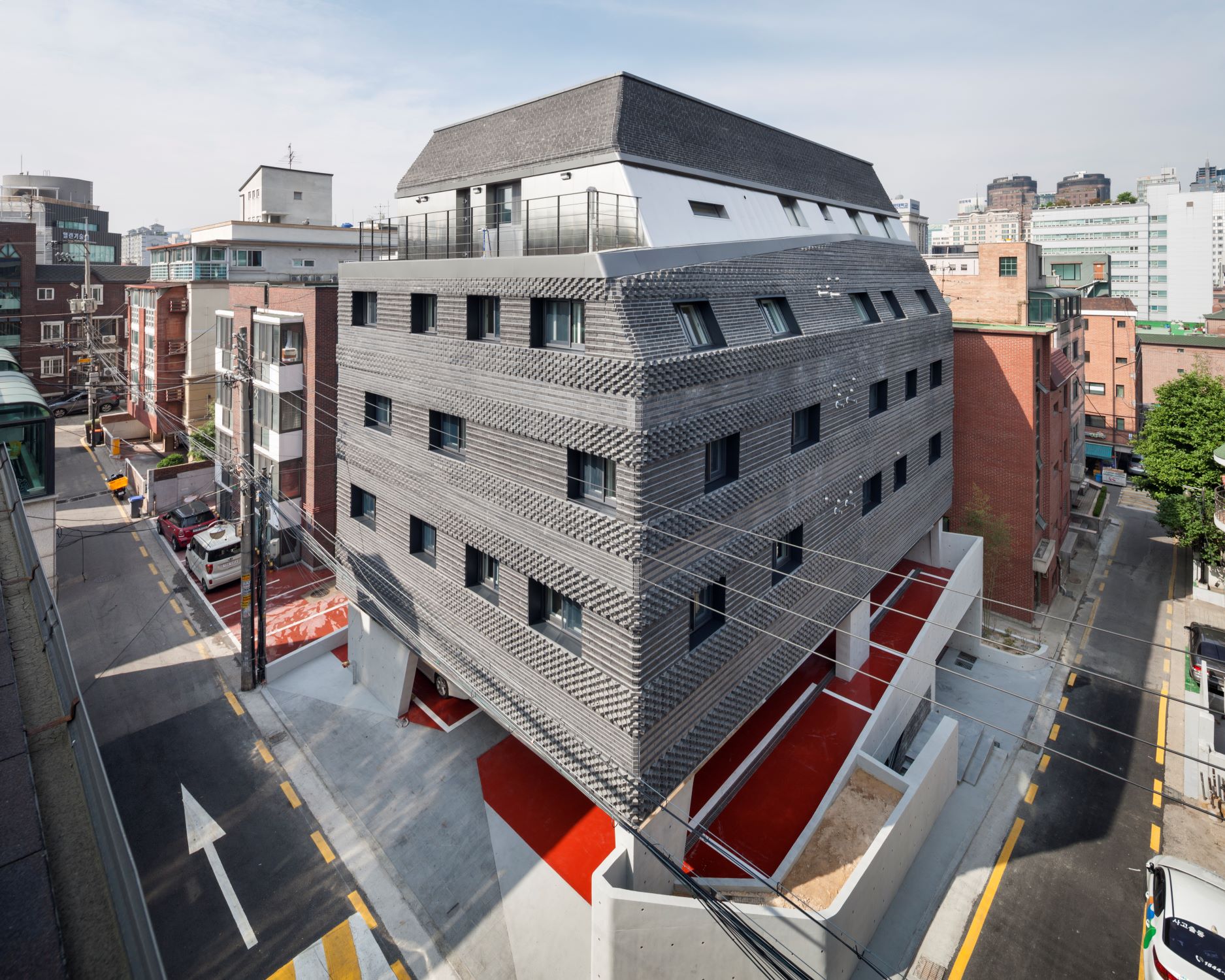
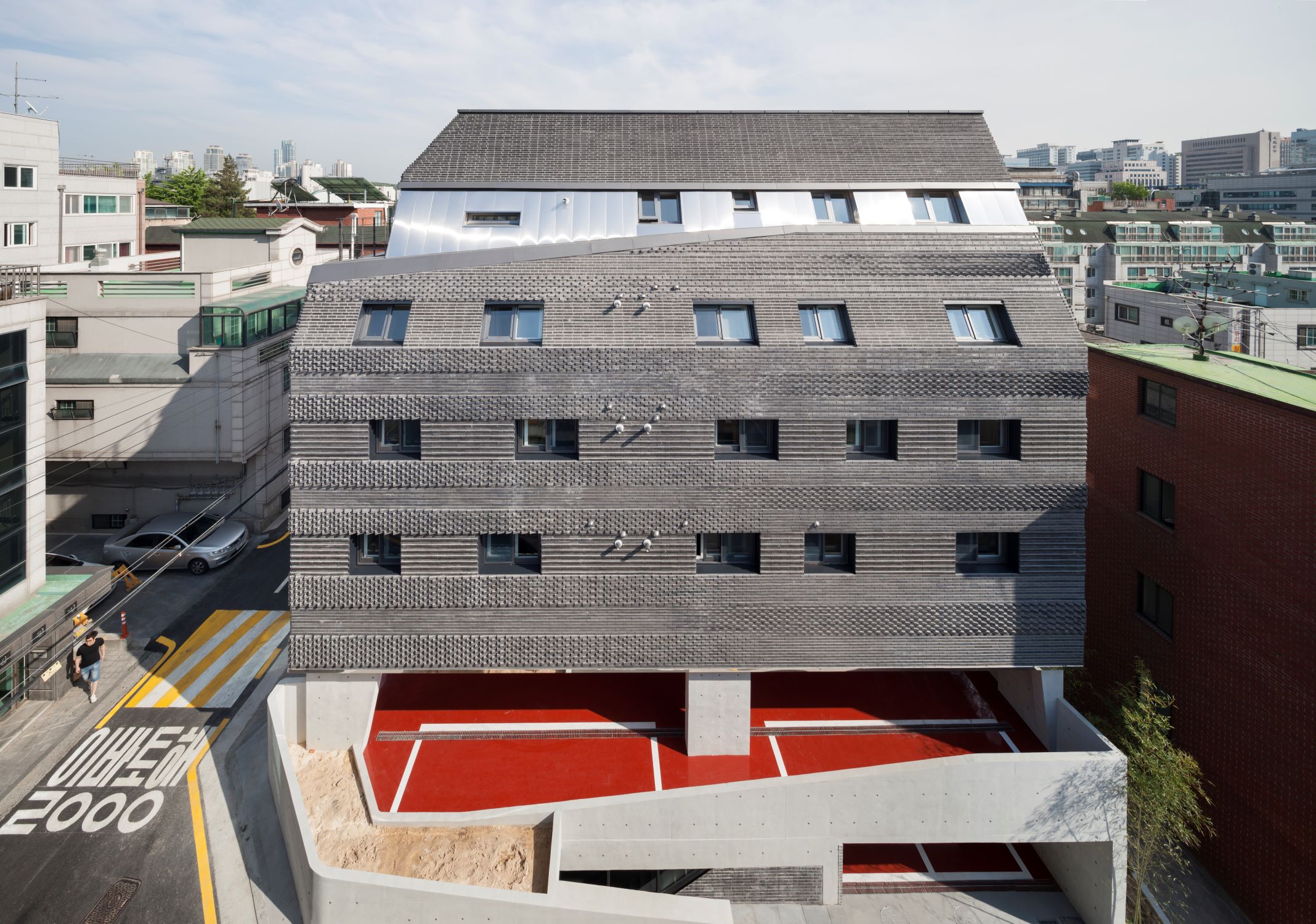
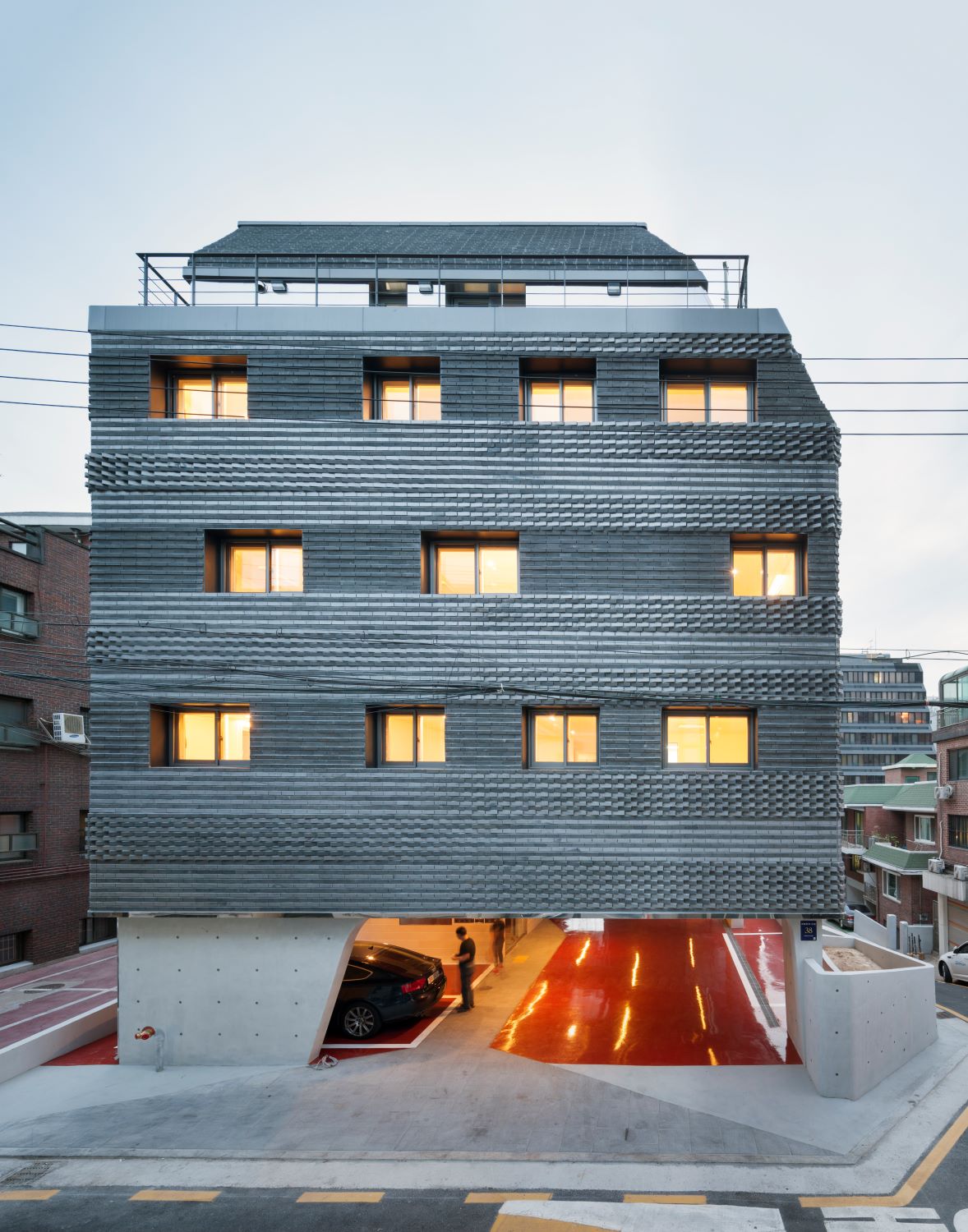
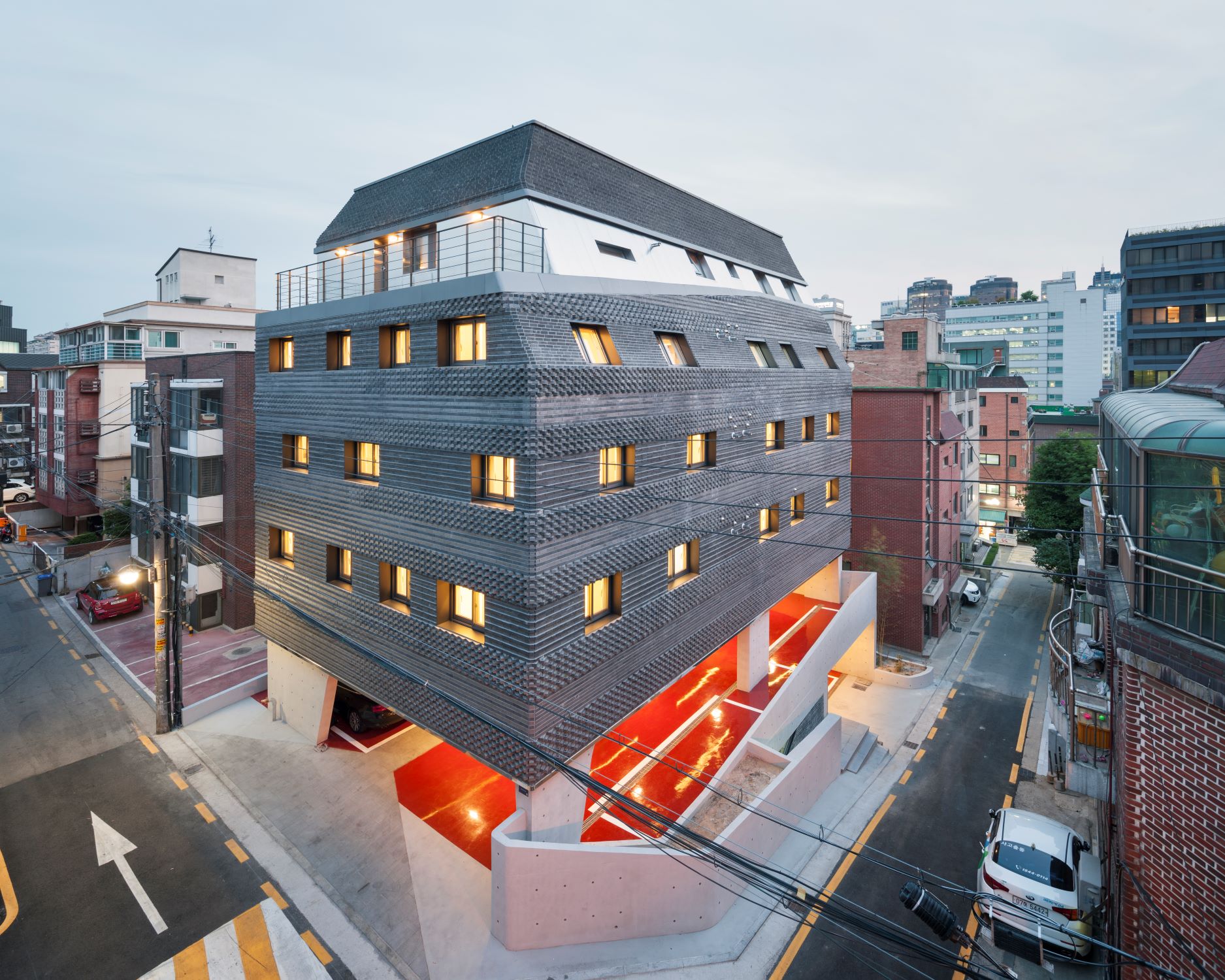
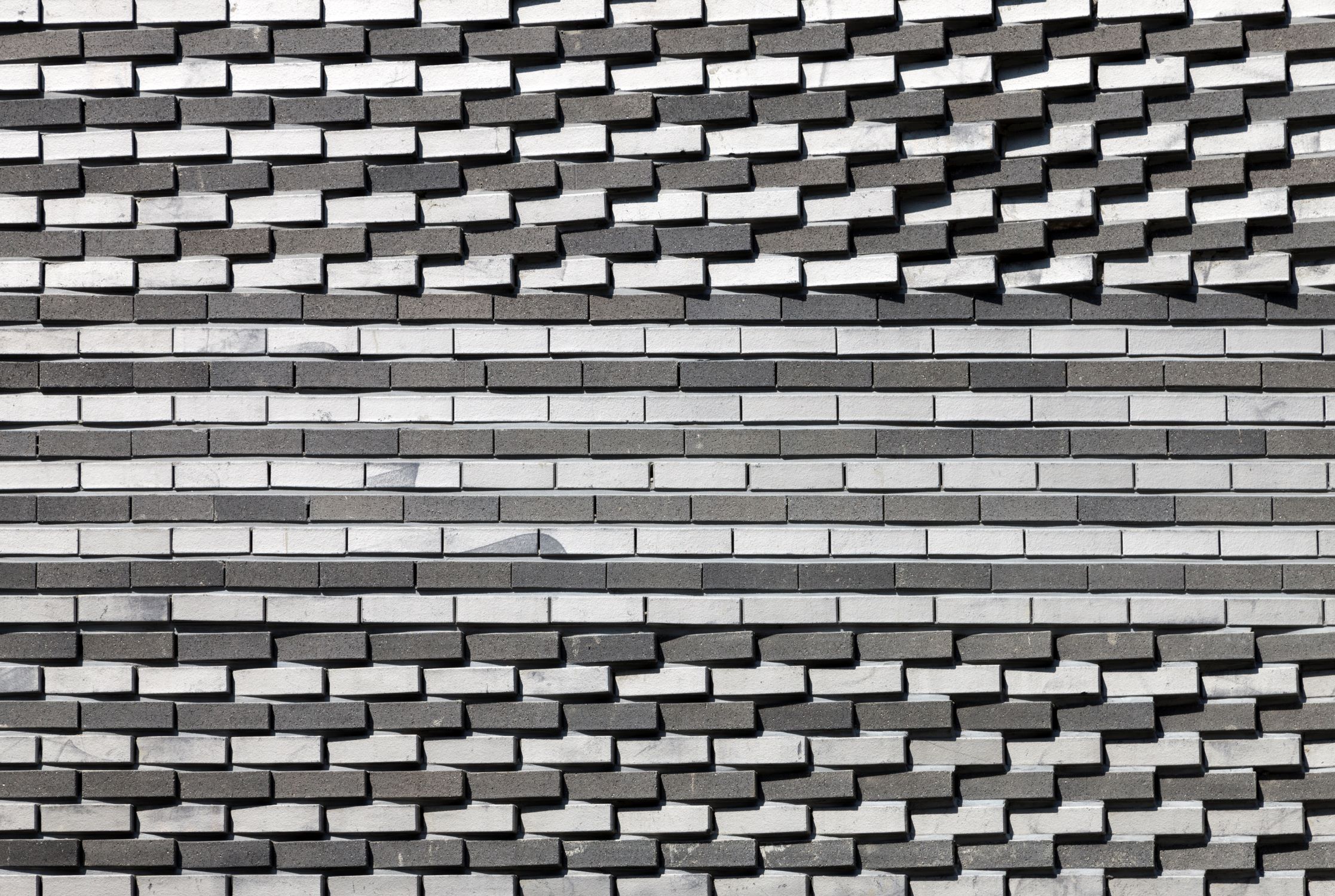
파사드는 세 가지 유형의 벽돌을 서로 다른 각도로 쌓아 구성되었다. 단위 패턴은 층별로 반복되며, 음과 양이 교차하듯 입면 전체를 따라 흐른다. 쌓기 방식과 패턴 사이에서 발생하는 긴장감, 그리고 각도에 따라 달라지는 빛과 그림자는 입면에 다채로운 변화를 부여하며, 균질한 주변 도시 풍경 속에서 건물만의 독자적인 정체성을 형성한다.
Crossing Bricks proposes an ideal model that integrates residential living and investment within a multi-family housing project. Taking advantage of the site’s sloping topography, commercial space is located on the basement level, while the upper floors accommodate rental units composed of studio and one-bedroom apartments. The top floor is reserved as the owner’s residence, forming a unified portfolio in which rental income and private living coexist.
To respond to northern daylight regulations, the building core is positioned toward the south, maximizing both the number and efficiency of the rental units. In consideration of the differing daily schedules of owner and tenants, clerestory windows are introduced in the owner’s residence on the top floor, allowing natural light to penetrate deeply into the interior during daytime hours.
The façade is composed through the interweaving of three types of bricks, each laid at different angles. The unit patterns are repeated floor by floor, crossing and flowing across the elevation in a rhythm reminiscent of the interplay between yin and yang. The tension generated between brick-laying techniques and patterns, along with shadows cast by changing angles of light, produces a dynamic façade that establishes a distinct architectural identity within an otherwise uniform urban context.