Wave Louver Building

Information

  • Location: Yongin-si, Gyeonggi-do, South Korea
  • Year: 2022
  • Type: Office
  • Site Area: 6,064.80 sqm
  • Building Area: 3,598.44 sqm (Expansion 1,507.66 sqm)
  • Gross Floor Area: 24,904.94 sqm (Expansion 8,522.49 sqm)
  • Materials: Aluminum Panel, Stone
  • Building Scope: B2F-7F

한국알콜산업의 본 건물은 남측에 배치된 업무 공간과 유리 파사드로 인해 직원들이 더위를 호소하는 문제가 있었다. 이 문제는 특히 여름철에 심각하게 나타나 업무 효율성을 저하시킬 수 있는 잠재적 요인으로 작용하였다. 또한 주차장이 투웨이 방식으로 설계되어 차량 출입이 불편하고 교통 체증을 유발하는 문제도 존재하였다. 이러한 문제들을 해결하기 위해 본 설계에서는 몇 가지 중요한 전략을 도입하였다.

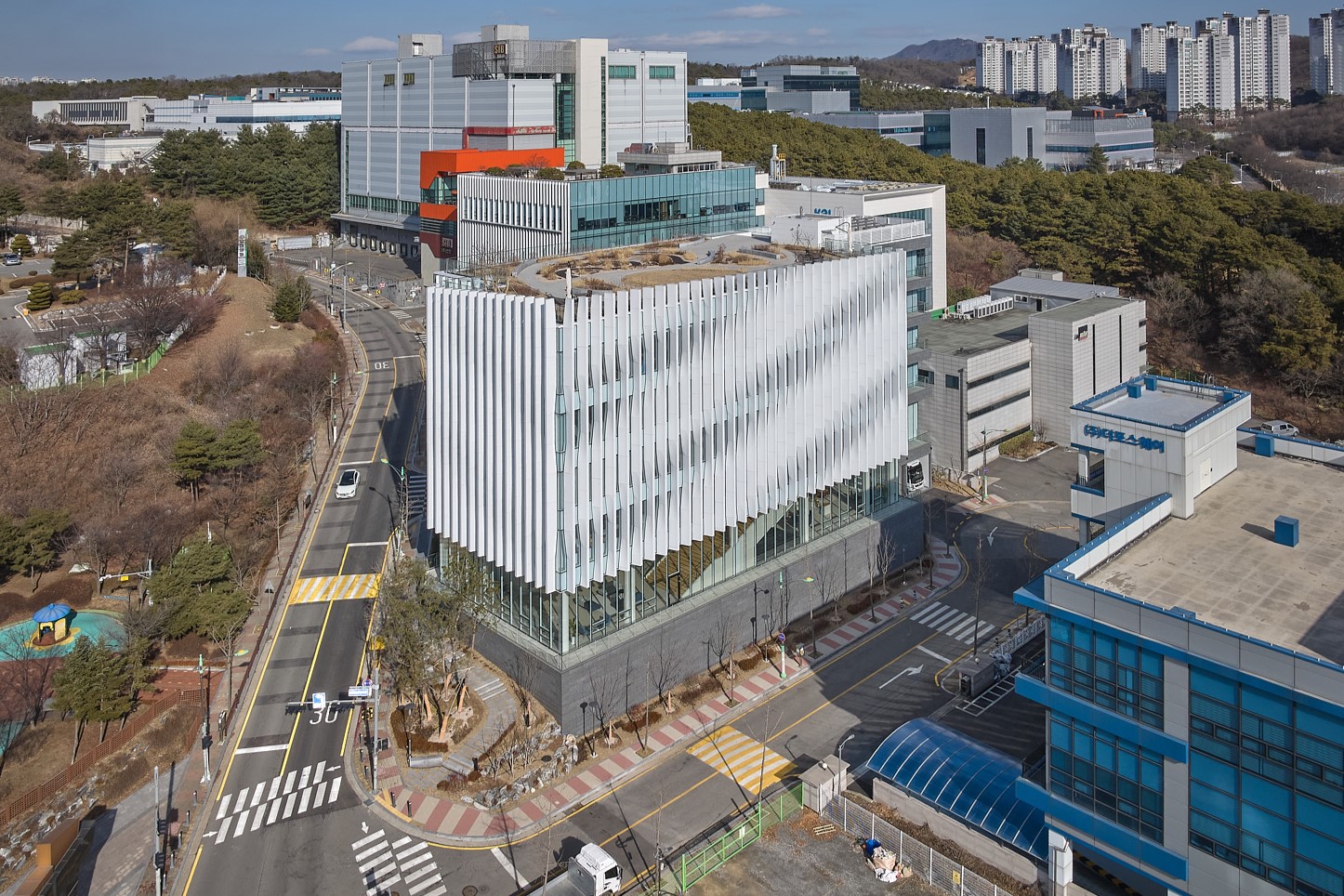
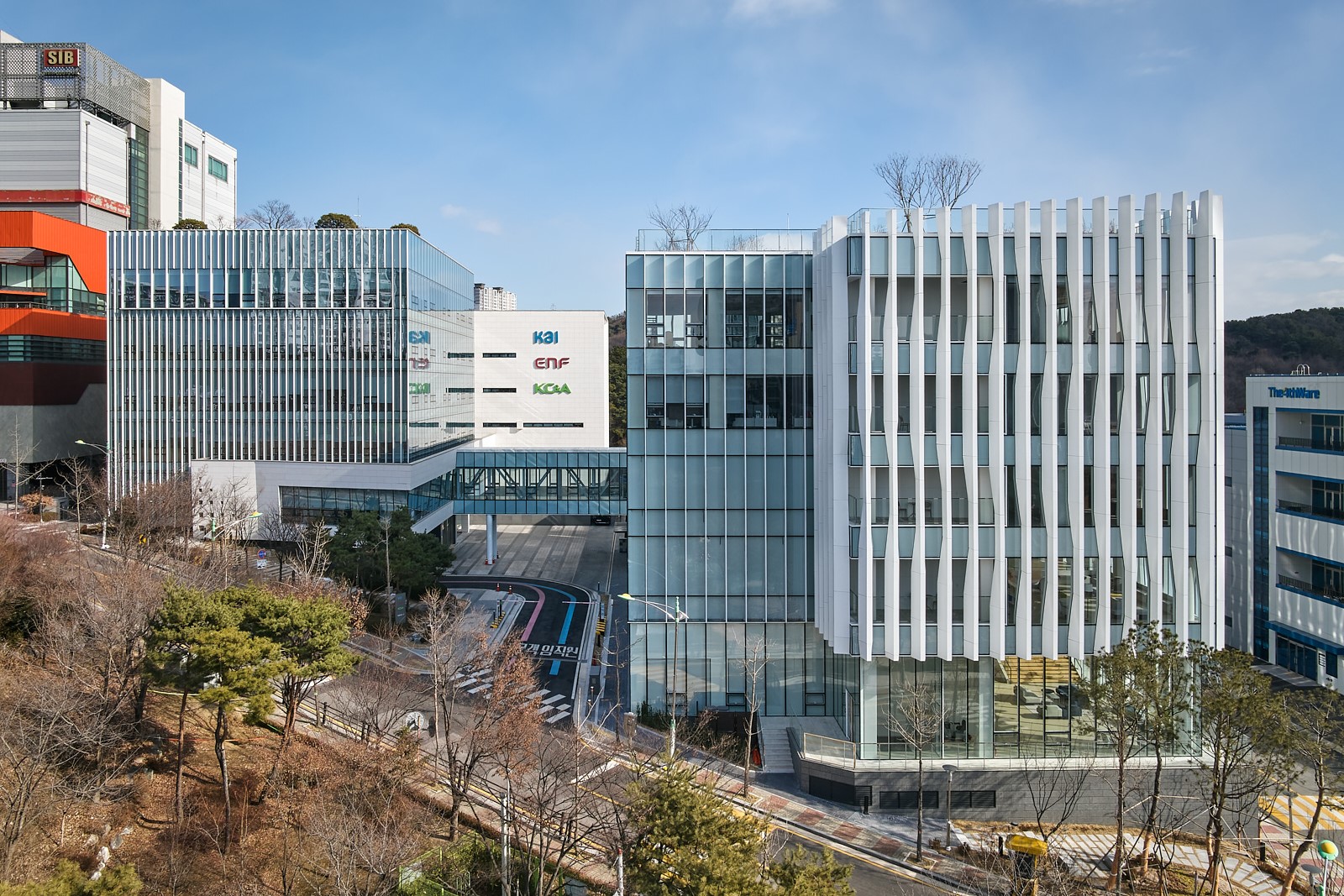
우선 본 건물 남측 대지에 복지동을 새롭게 계획하였다. 복지동은 임직원을 위한 복합문화시설로 구성하여 직원들의 복지 향상을 도모하였다. 복지동은 본관으로 유입되는 직사광선을 일부 차단함으로써 본 건물의 온도 상승 문제를 완화한다. 이를 통해 여름철에도 쾌적한 실내 환경을 유지할 수 있다. 또한 복지동과 본 건물을 지하로 연결하여 주차장을 원웨이 방식으로 계획하였으며, 이를 통해 차량 흐름을 원활하게 하고 교통 불편을 해소하였다.
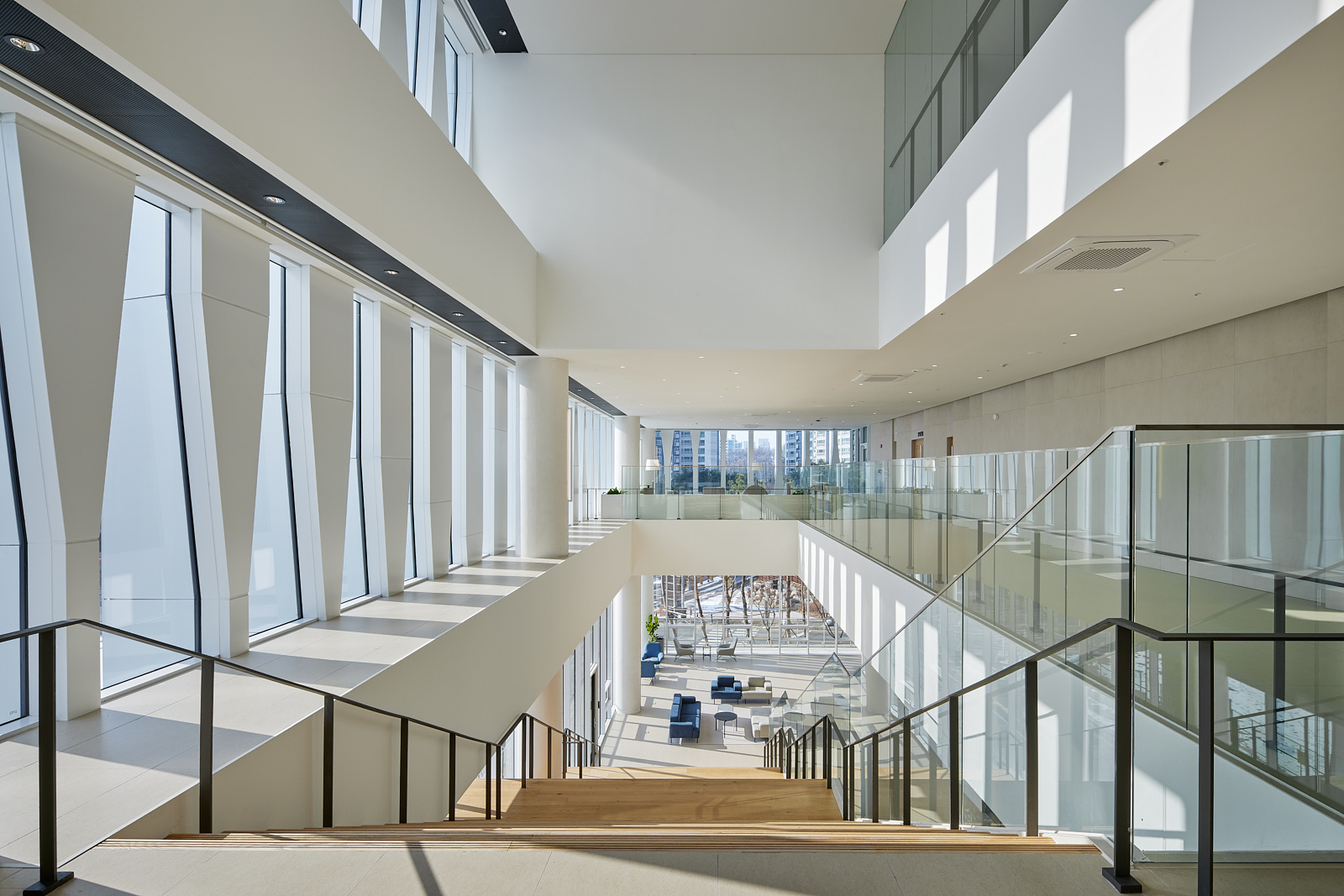
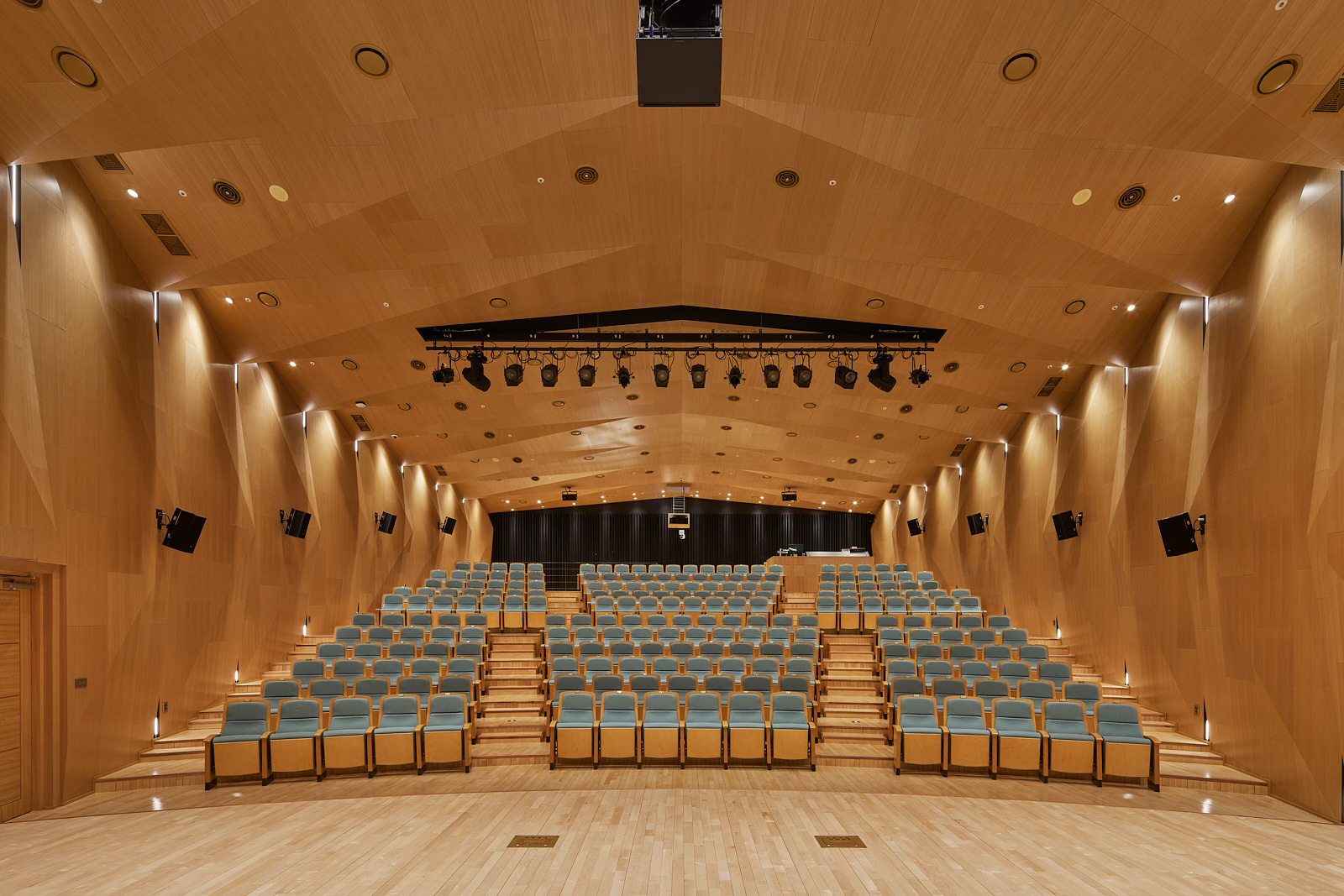
평면 구성에서는 남측을 오픈 스페이스로 설정하여 자연광을 최대한 유입하도록 계획하였다. 남측 오픈 스페이스는 직원들이 휴식과 재충전을 할 수 있는 공간으로 활용되며, 풍부한 자연광을 통해 밝고 쾌적한 환경을 제공한다. 북측에는 공연장과 같은 문화 프로그램 공간과 사무 공간을 배치하였다. 이러한 배치는 남측의 개방적이고 밝은 공간과 북측의 비교적 조용한 공간을 구분함으로써 다양한 기능을 효율적으로 수용할 수 있도록 한다. 특히 코어 공간은 자연광을 최대한 확보할 수 있도록 설계하여 실내 환경의 쾌적성을 극대화하였다.

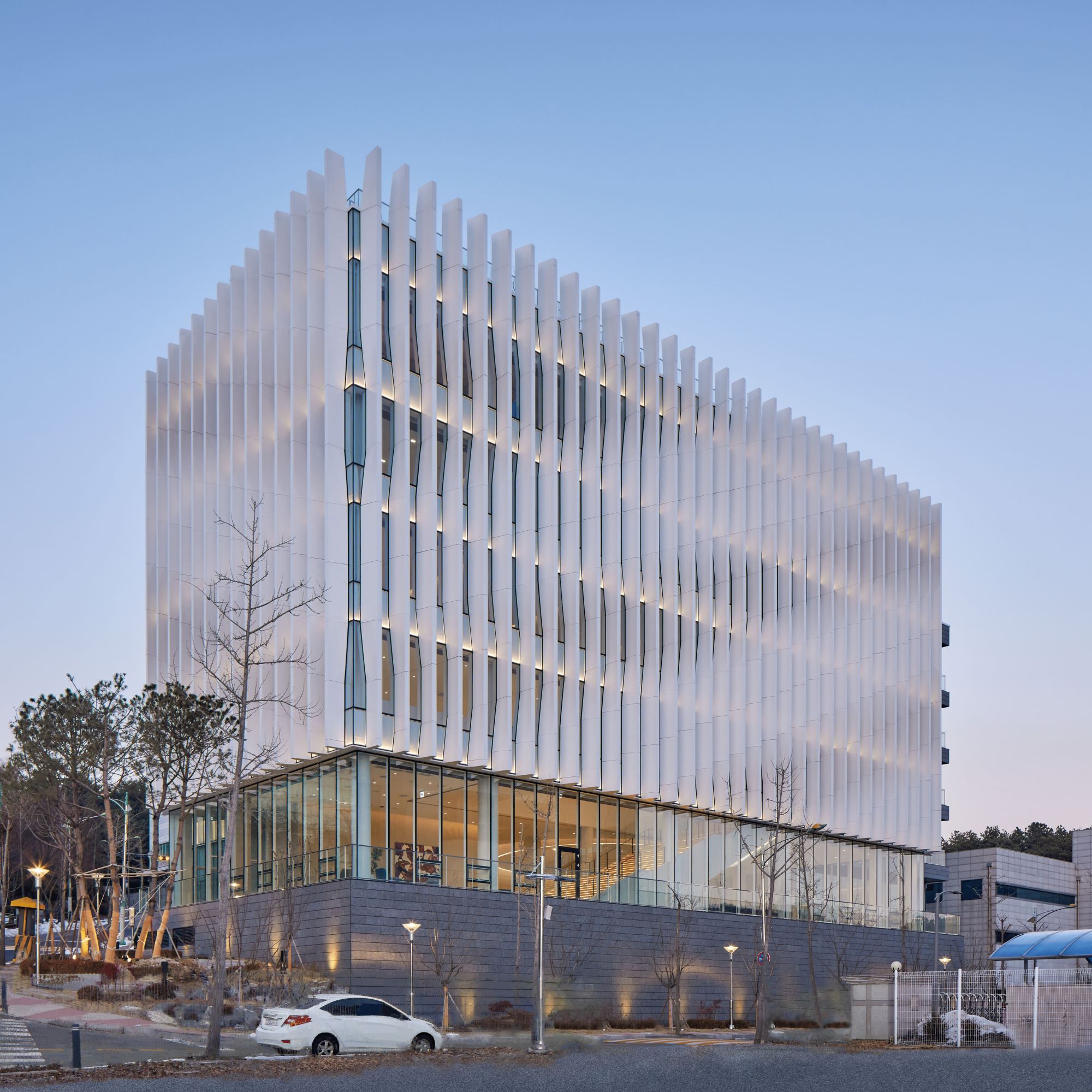
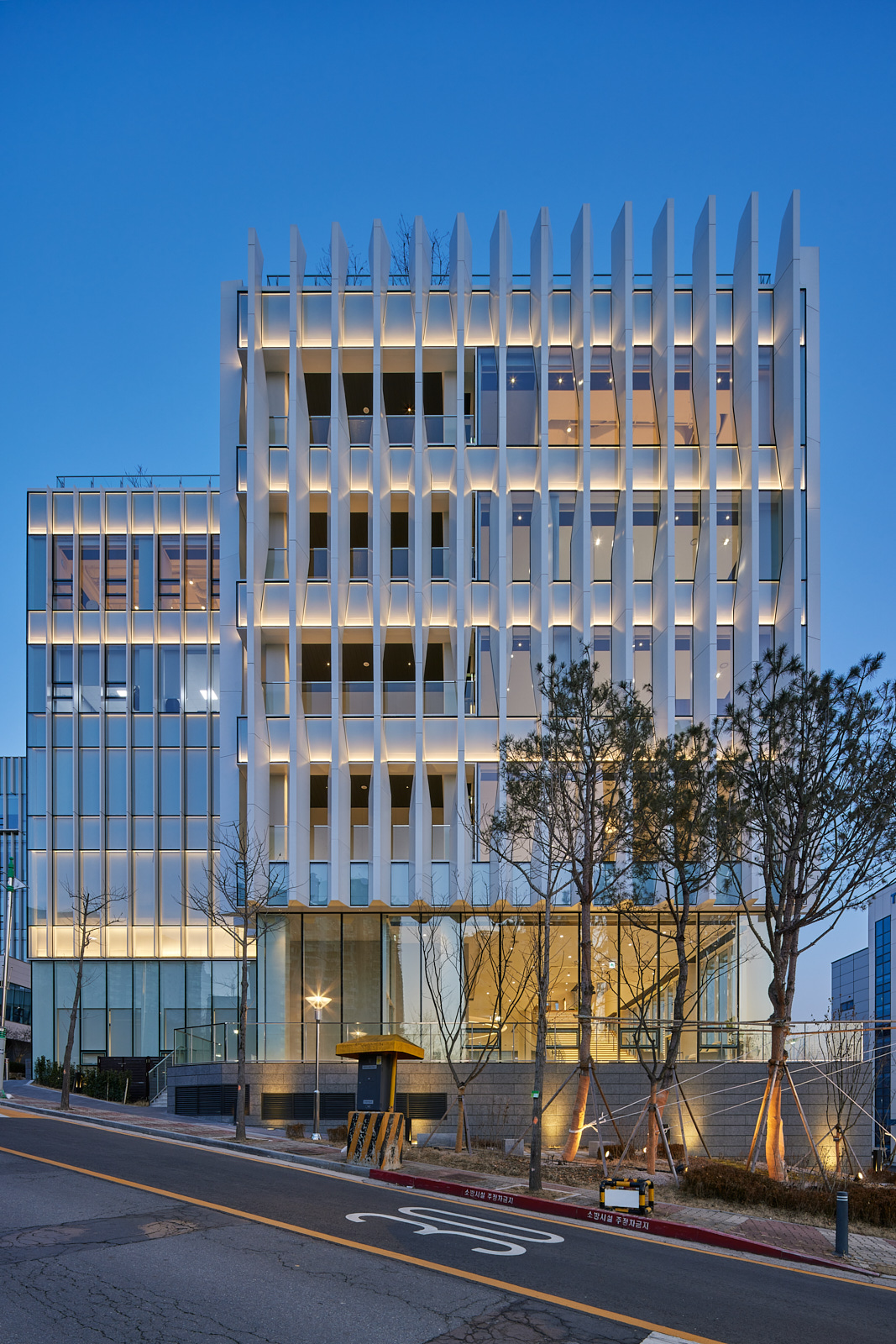
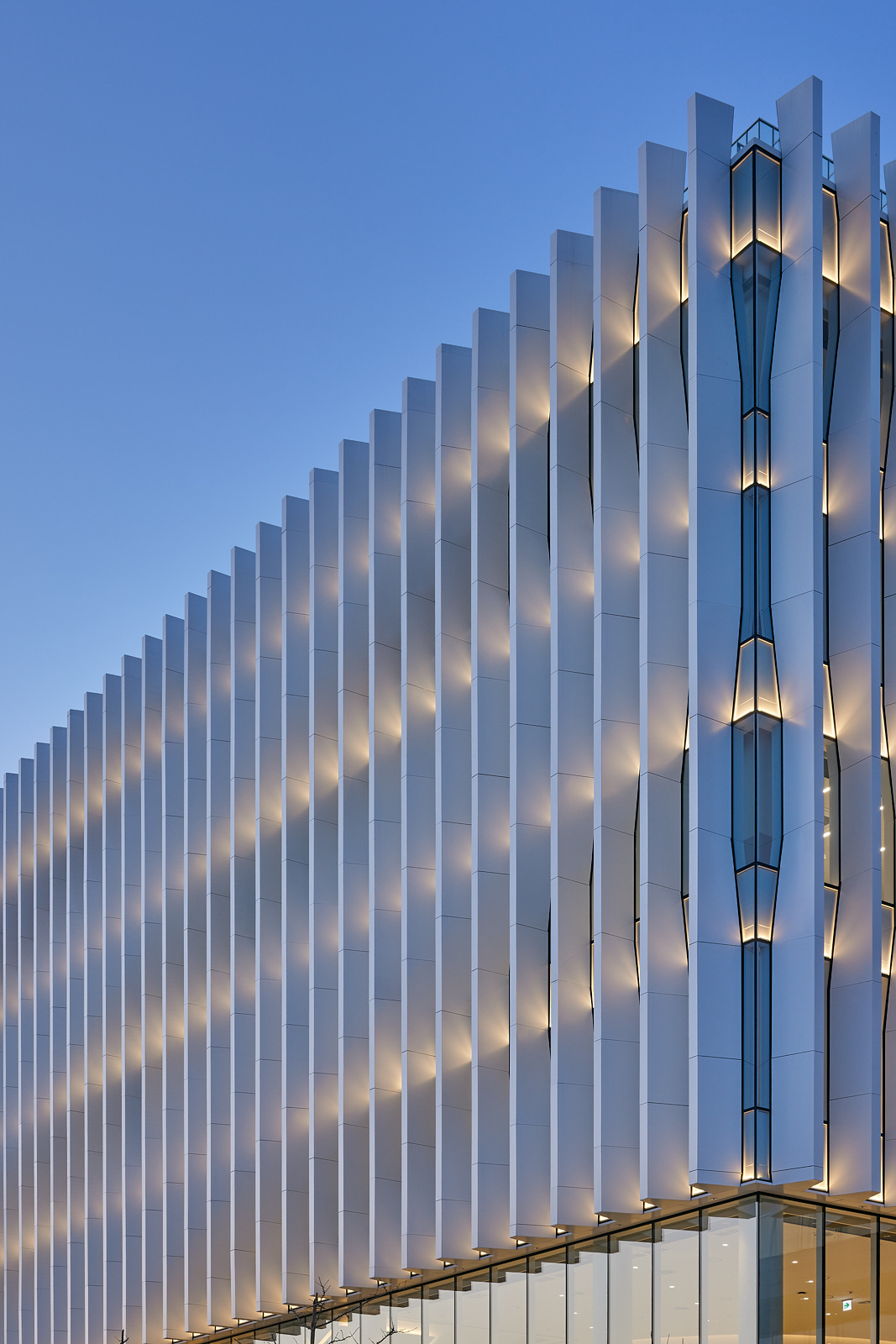
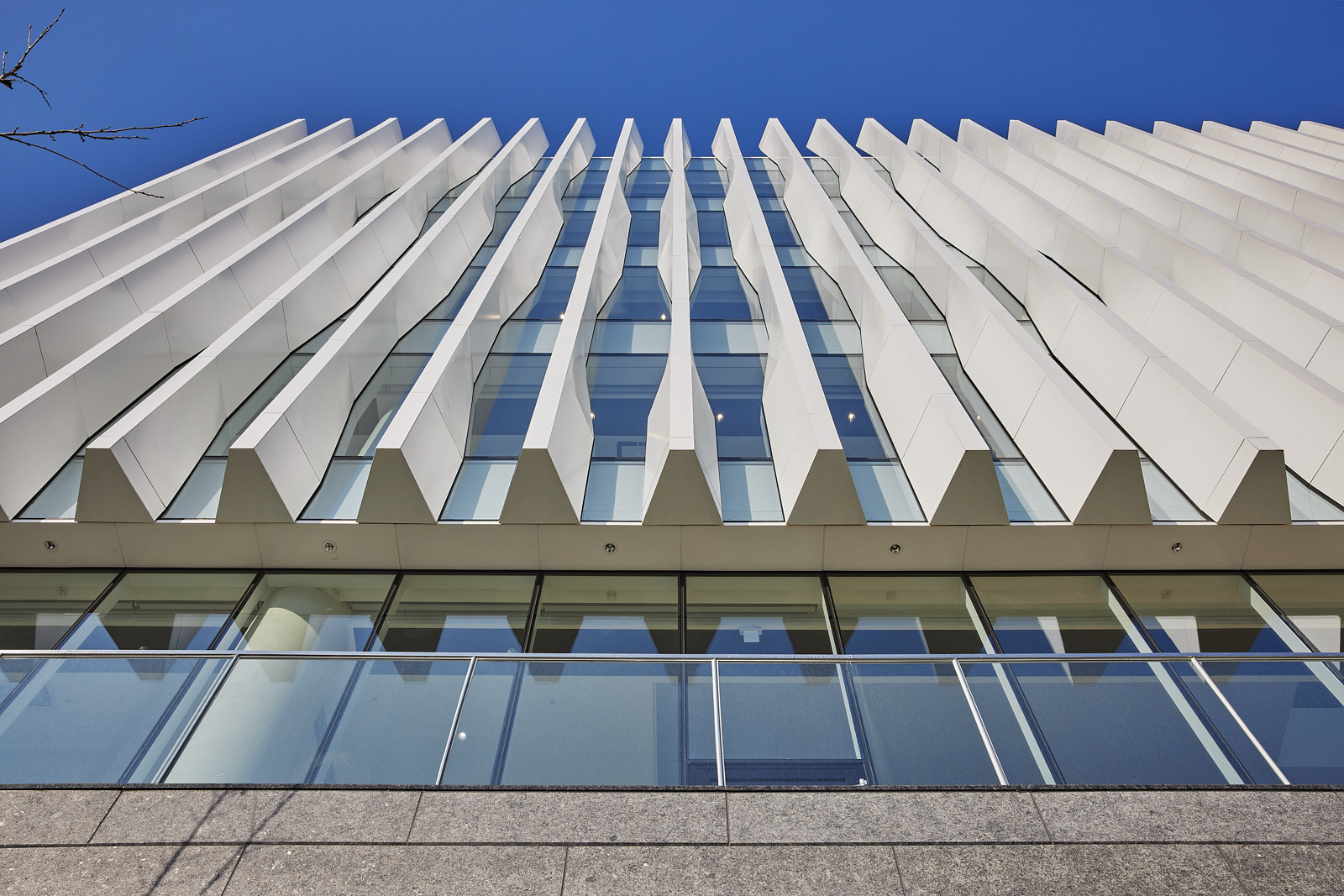
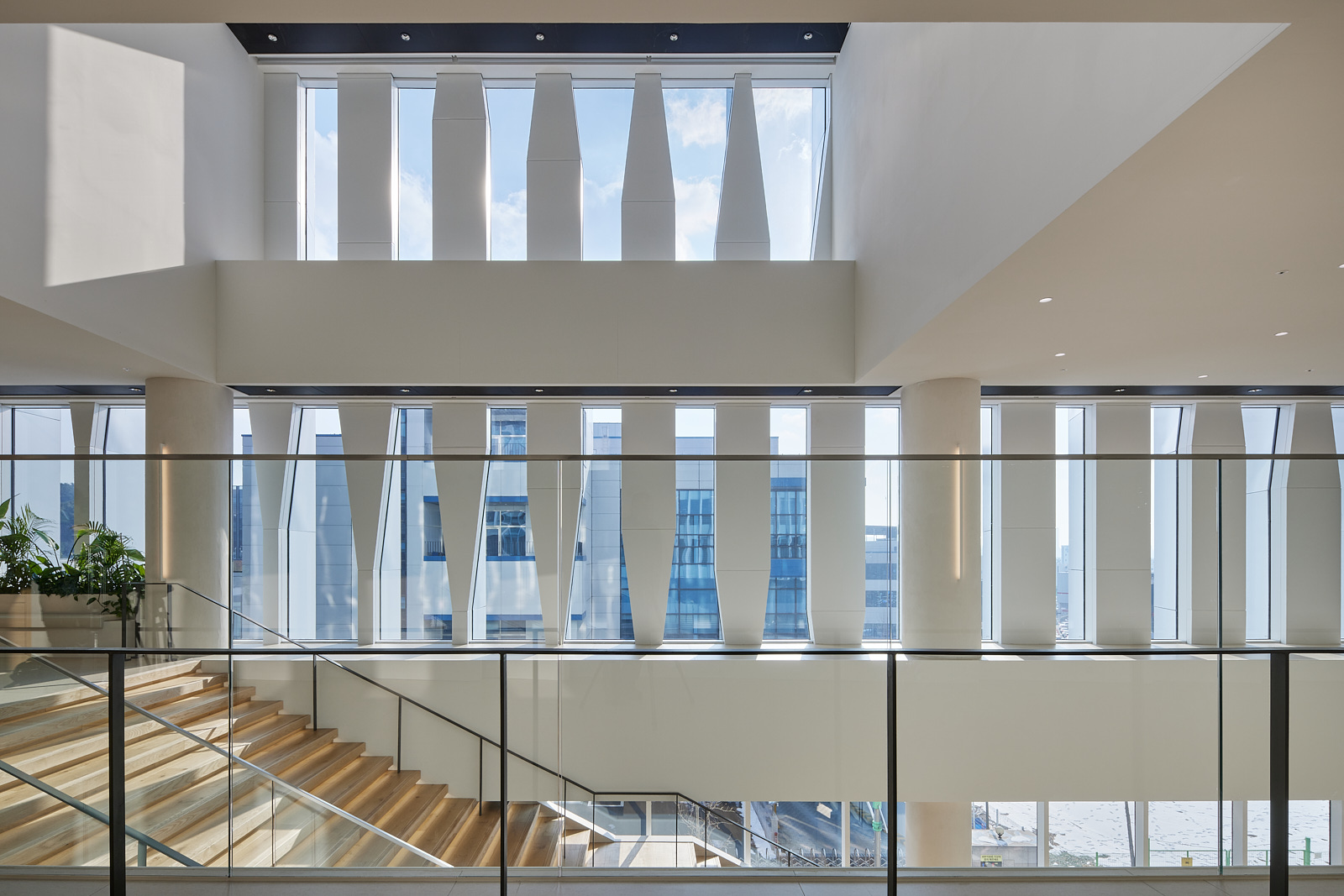
입면 구성에서는 깊이감 있는 루버를 적용하여 남향의 강한 일사를 차단하는 동시에 내부에서는 개방감 있는 조망을 확보하였다. 루버는 건물 외관에 입체감과 독창성을 부여하며, 자연광 조절을 통해 에너지 효율을 향상시킨다. 루버 시뮬레이션을 통해 깊이와 형태에 따른 일사량 변화를 분석하고, 이를 바탕으로 최적의 디자인을 도출하였다. 그 결과 실내 온도를 효과적으로 조절하고 쾌적한 실내 환경을 유지할 수 있다.

재료는 3T 알루미늄 루버를 사용하였다. 알루미늄의 탄성을 활용해 패널을 트위스트 방식으로 제작함으로써 절곡면과 코킹을 최소화하였다. 이는 시공성을 향상시키고 유지관리 비용을 절감하며, 건물의 미적 완성도를 높이는 데 기여한다. 또한 알루미늄 루버는 내구성이 뛰어나고 경량이어서 구조체에 부담을 주지 않으면서도 효과적인 태양열 차단 성능을 발휘한다. 이러한 재료 선택은 환경 친화적이며 건물의 수명을 연장하는 데 중요한 역할을 한다.

The main building of Korea Alcohol Industry faced issues related to overheating, primarily due to office spaces located on the southern side and an extensive glass façade. This problem became particularly severe during the summer, negatively affecting employee comfort and work efficiency. In addition, the parking system was designed as a two-way circulation, causing inconvenience in vehicle access and frequent traffic congestion. To address these challenges, this project introduces several key architectural strategies.

First, a new welfare building was planned on the southern site of the main building. Designed as a multi-functional cultural and welfare facility for employees, the new building aims to enhance overall workplace well-being. At the same time, it partially blocks direct sunlight entering the main building, effectively mitigating excessive heat gain. This intervention helps maintain a comfortable indoor environment even during the summer months. Furthermore, the welfare building is connected to the main building underground, allowing the parking system to be reorganized into a one-way circulation. This improves traffic flow and significantly reduces congestion and inconvenience.

In terms of spatial planning, the southern side is designed as an open space to maximize the use of natural daylight. This open area serves as a place for rest and rejuvenation for employees, providing a bright and pleasant environment. On the northern side, cultural program spaces such as a performance hall, along with office areas, are arranged to create a quieter and more controlled atmosphere. This clear spatial zoning between the bright, open southern areas and the calmer northern areas allows for efficient functional organization. The core areas are also designed to receive abundant natural light, further enhancing indoor comfort.

For the façade design, deep louvers are applied to effectively block strong southern sunlight while maintaining open and expansive views from the interior. The louvers give the building a distinctive and dynamic appearance while improving energy efficiency through controlled daylighting. Solar simulations were conducted to analyze variations in solar radiation based on louver depth and form, leading to an optimized design that effectively regulates indoor temperature and maintains a comfortable environment.

The façade material consists of 3T aluminum louvers. By utilizing the elasticity of aluminum, the panels are twisted rather than heavily folded, minimizing the need for bends and sealant work. This approach improves constructability, reduces maintenance costs, and enhances the overall aesthetic quality of the building. In addition, aluminum louvers offer high durability and lightweight performance, providing effective solar shading without imposing excessive structural loads. This material strategy is environmentally responsible and contributes to extending the building’s lifespan.

Go to list