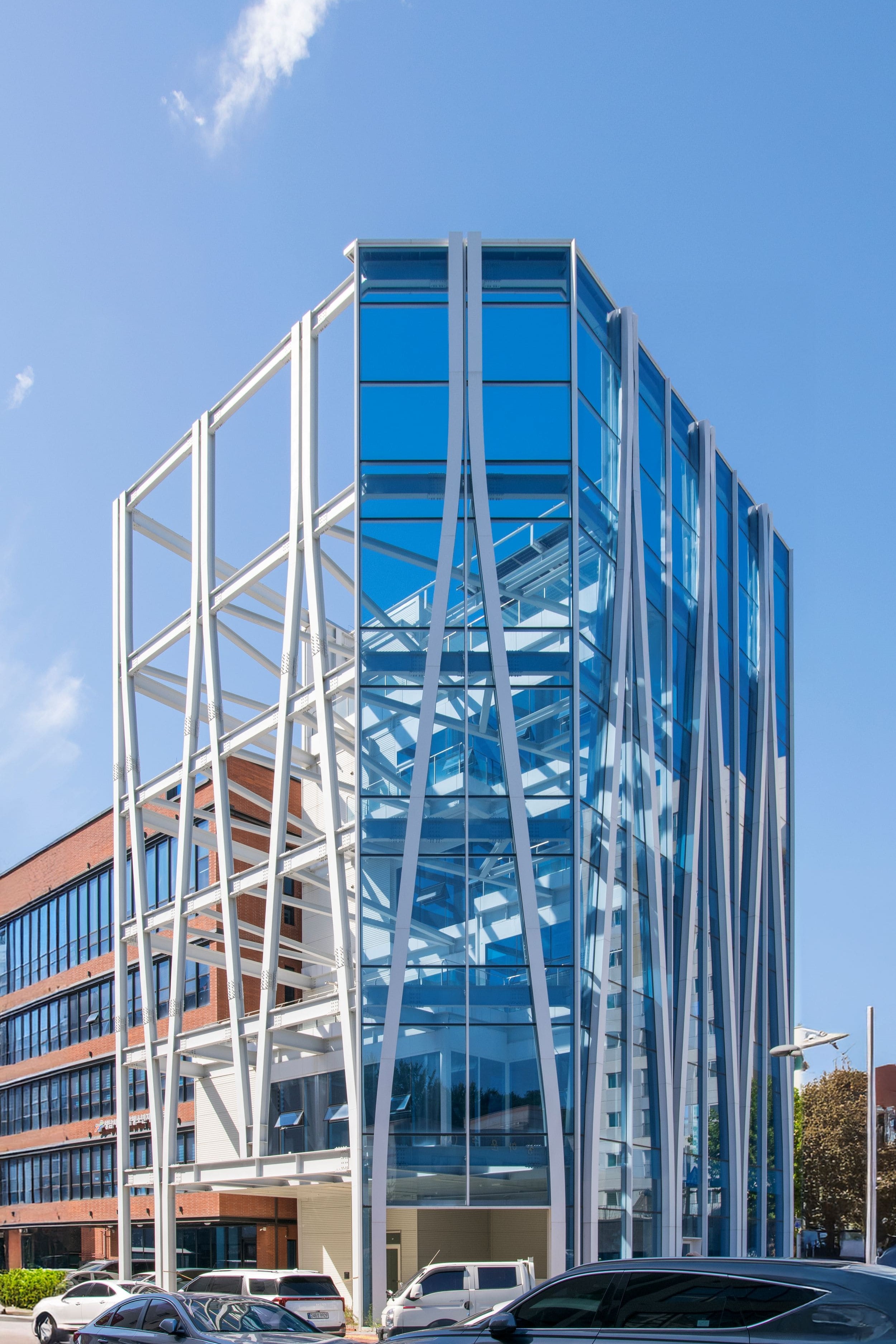
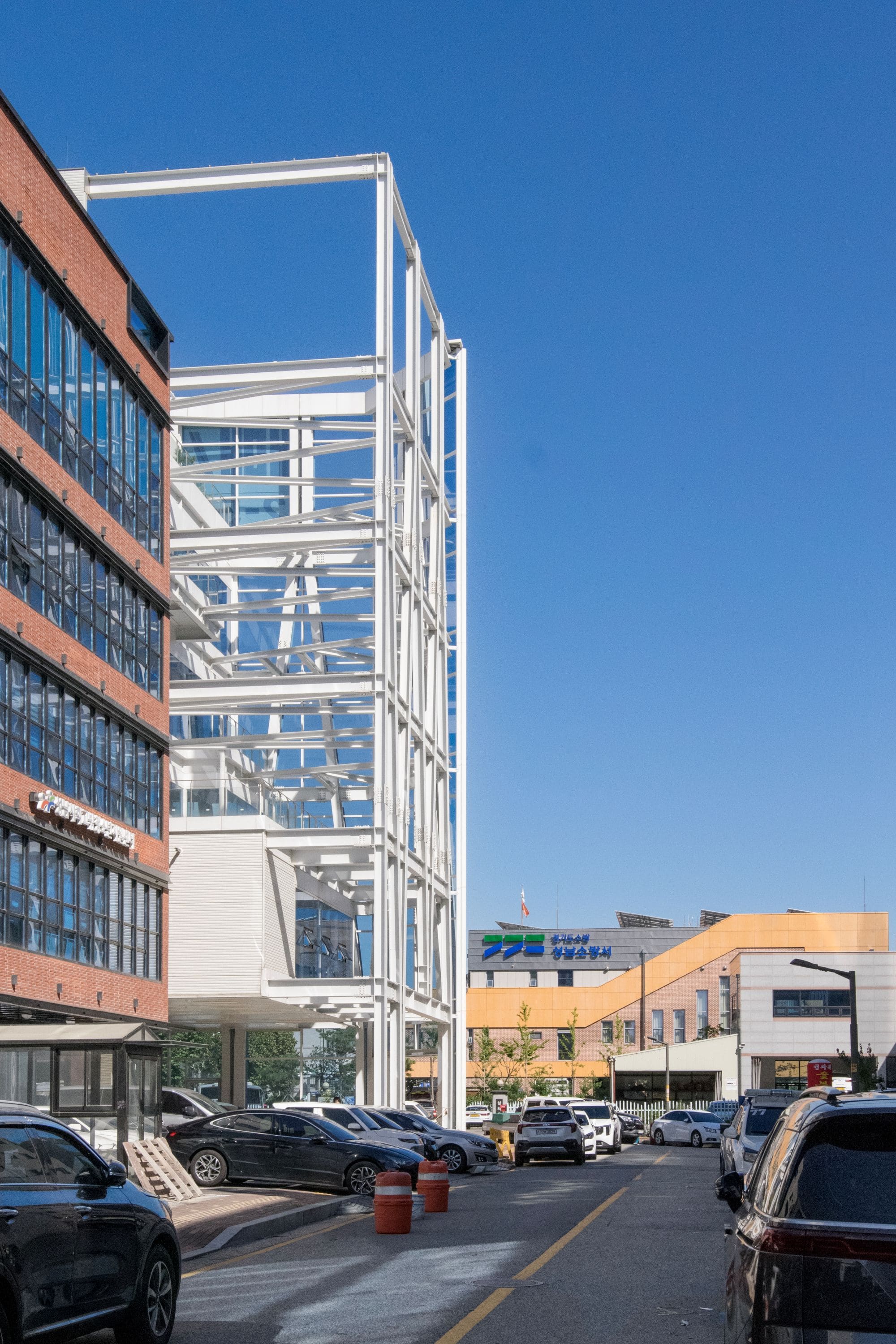
TEBAH means 'Ark' and 'Box' in Hebrew. Located in Hadaewon-dong, this neighborhood commercial building is an experimental project constructed entirely with a steel frame structure.
While most neighborhood commercial buildings in Korea are built in reinforced concrete, TEBAH was conceived as a prefabricated steel system, with structural components fabricated off-site and assembled on-site. This was not merely a structural decision, but an attempt to redefine the relationship between design, fabrication, and construction.
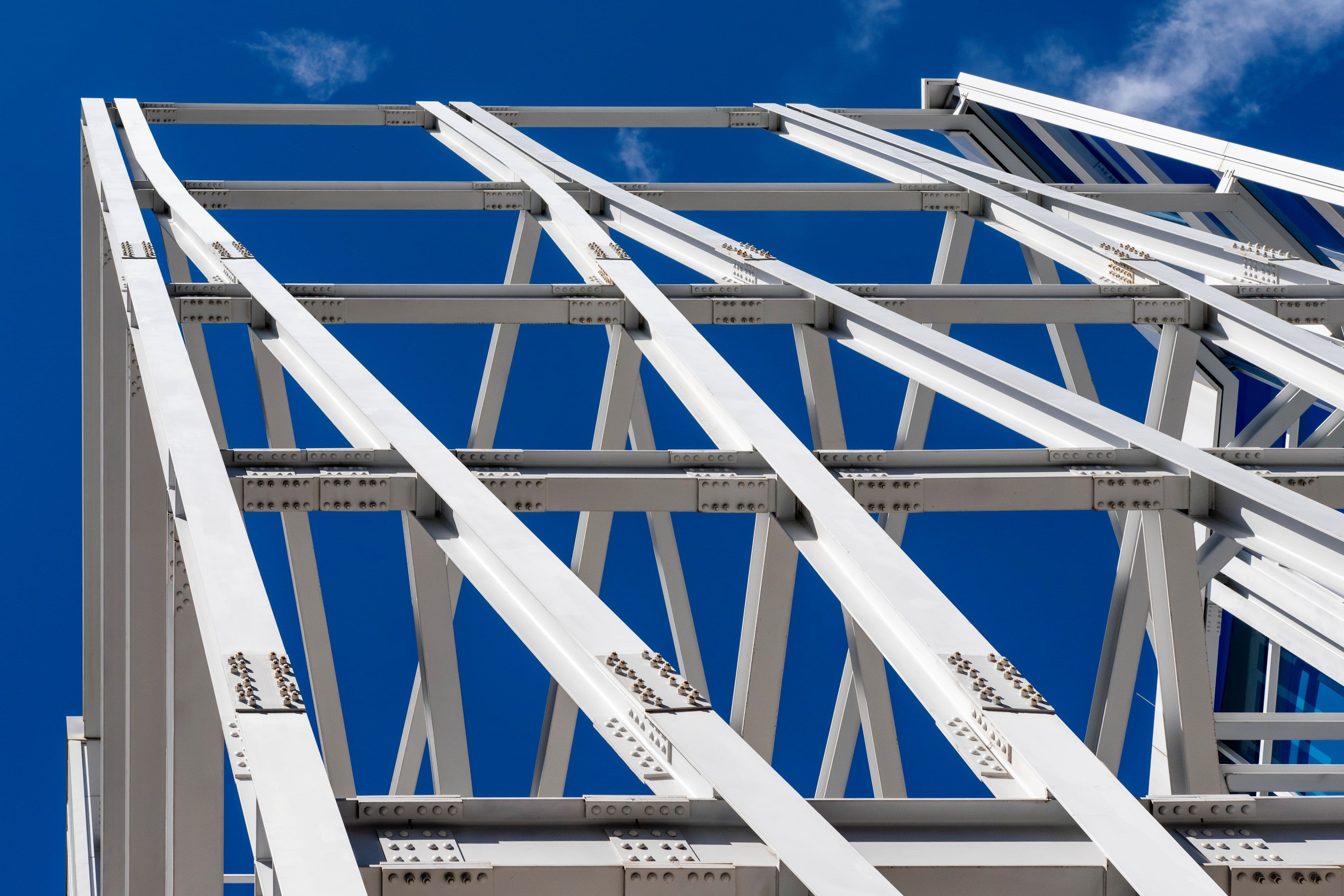
By embracing geometries difficult to achieve in reinforced concrete—particularly free-form curved surfaces—the project sought to create a symbolic façade facing the street. The lightness and flexibility of steel were fully exploited, allowing structure itself to become form.
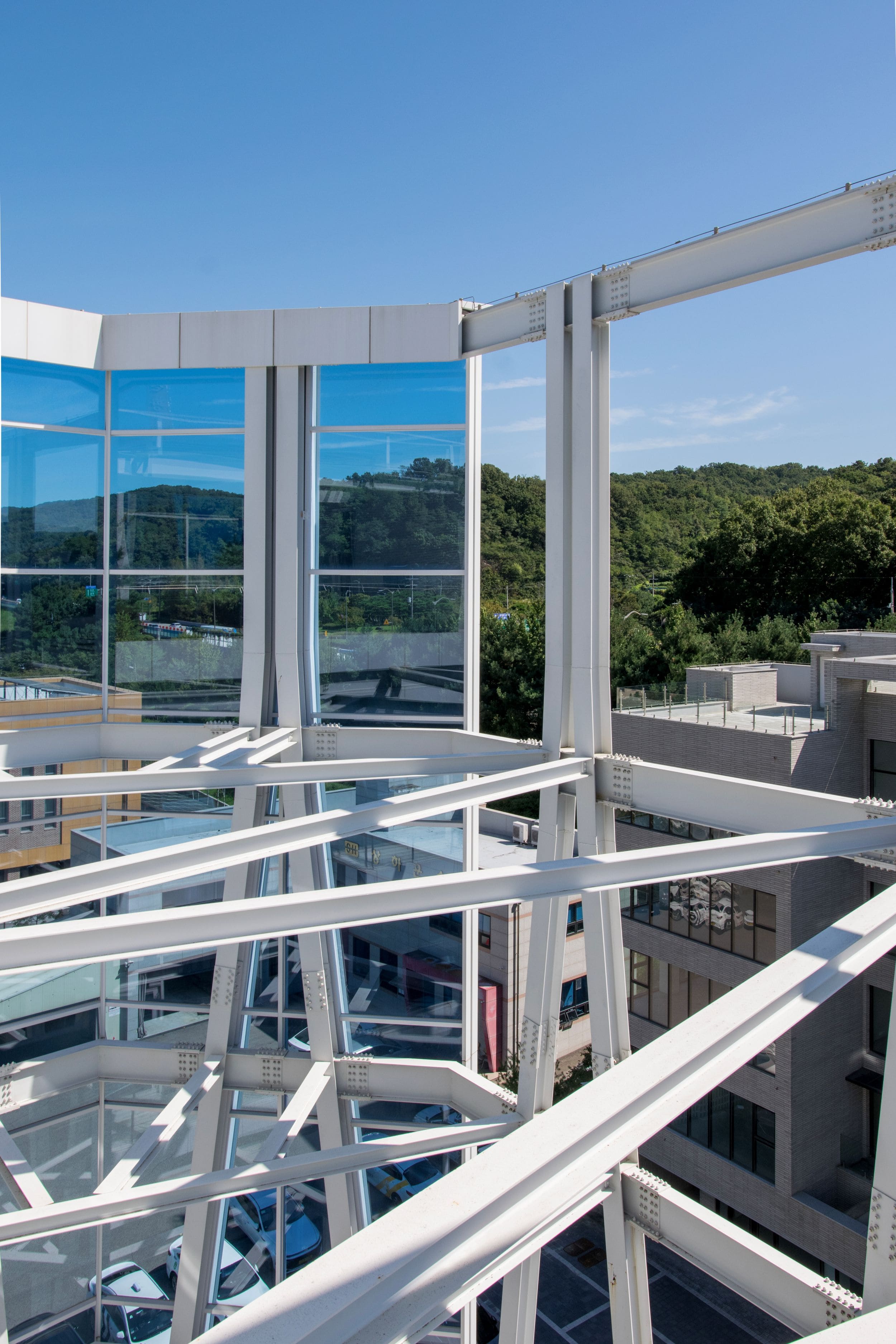
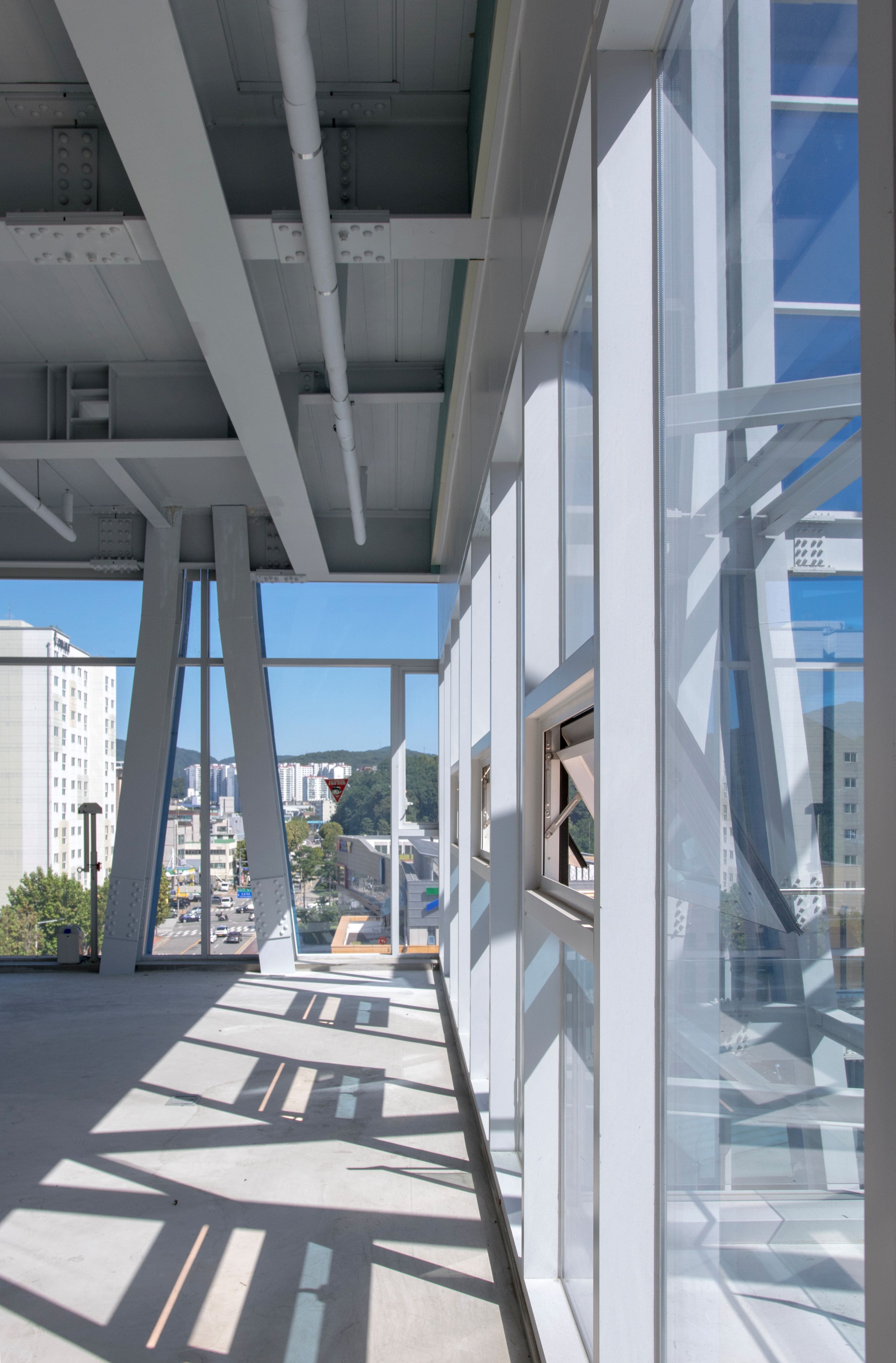
Within a limited budget, minimizing on-site construction processes was essential. Instead of relying on conventional two-dimensional drawings, an integrated workflow based on 3D data was implemented from design through fabrication and assembly. The 3D data generated during the design phase was directly converted into fabrication data. Each structural member was precisely manufactured in the factory with millimeter accuracy. The exterior steel structure is composed of curved geometries, with beams and structural frames connecting at varying positions on each floor. Rather than repetition, the structure operates as a system of variation.
To maximize the allowable building coverage ratio, terraces were introduced at the rear of each floor. The steel framework wraps the site, simultaneously protecting the interior spaces and defining the architectural identity of TEBAH as perceived from the outside. Structure becomes the envelope, and the envelope, in turn, establishes spatial order. To realize this complex fabrication process within a controlled budget, the steel detailing software Tekla was utilized. This enabled high-precision connections between members and minimized tolerances during on-site assembly.
TEBAH is not simply a box. It is a structural experiment—designed through data, fabricated in the factory, and assembled on site.